
The Decision-Making Revolution: How to Transform Your Business Through Strategic Choices
 iHeartRadio iHeartRadio
  Spotify Spotify
  Amazon Music Amazon Music
  Pandora Pandora
  Audible Audible
  Deezer Deezer
  Podchaser Podchaser
  Spreaker Spreaker
  Apple Podcasts Apple Podcasts
  Youtube Music Youtube Music
  Podcast Addict Podcast Addict
  JioSaavn JioSaavn
  Castbox Castbox
  Castamatic Castamatic
  Castro Castro
  Fountain Fountain
  Goodpods Goodpods
  Overcast Overcast
  PocketCasts PocketCasts
  Podurama Podurama
  Podverse Podverse
  Podyssey Podyssey
  RSS Feed RSS Feed
  YouTube YouTube iHeartRadio iHeartRadio Spotify Spotify Amazon Music Amazon Music Pandora Pandora Audible Audible Deezer Deezer Podchaser Podchaser Spreaker Spreaker Apple Podcasts Apple Podcasts Youtube Music Youtube Music Podcast Addict Podcast Addict JioSaavn JioSaavn Castbox Castbox Castamatic Castamatic Castro Castro Fountain Fountain Goodpods Goodpods Overcast Overcast PocketCasts PocketCasts Podurama Podurama Podverse Podverse Podyssey Podyssey RSS Feed RSS Feed YouTube YouTube
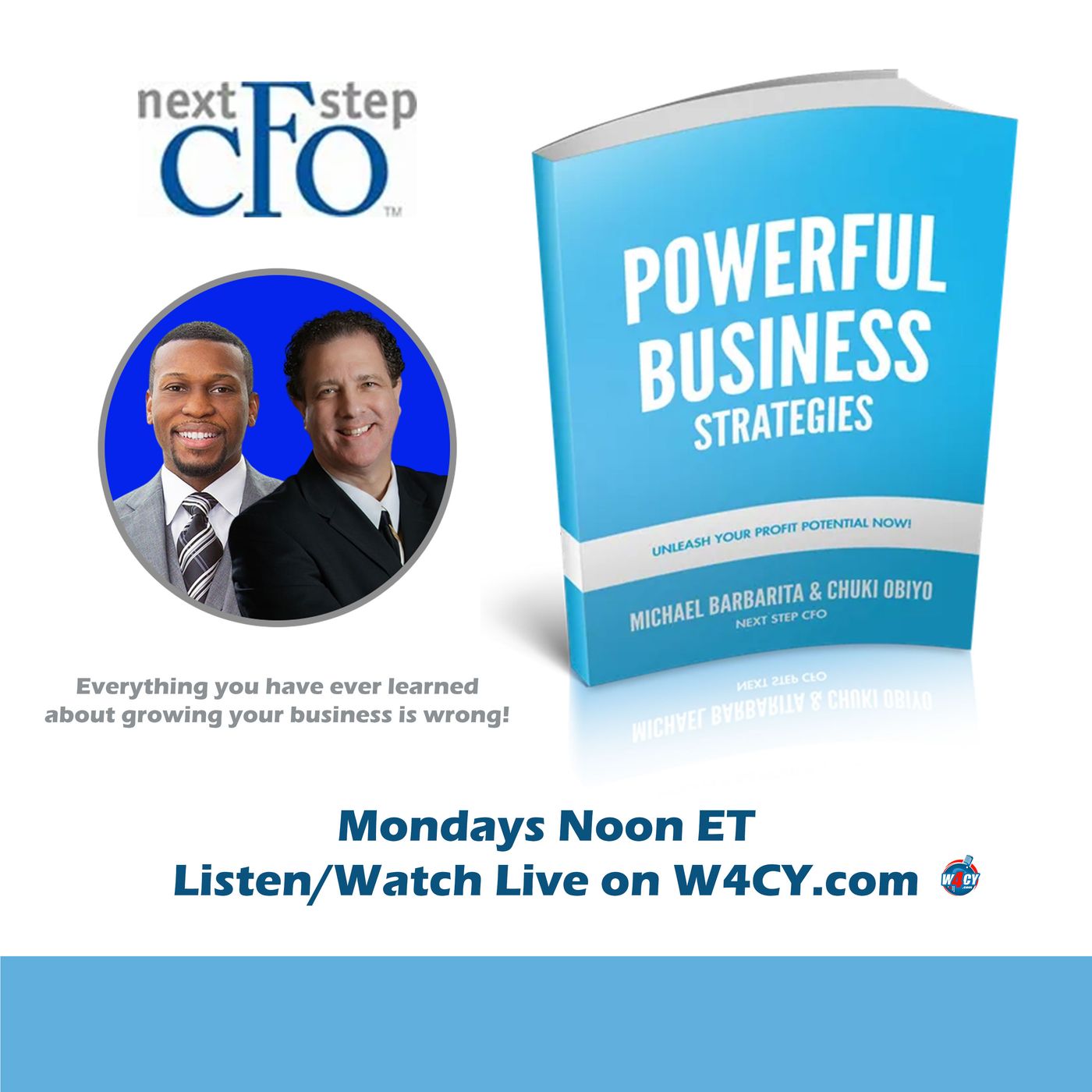
 In this episode, Michael Barbarita and Chuki Obiyo reveal why most business owners struggle with decision-making despite having access to more information than ever before. You'll discover the "Strategic Decision Framework" that enables business owners to make better, faster decisions that consistently drive profitable growth. Learn how to cut through analysis paralysis, make confident choices under uncertainty, and create a decision-making culture that accelerates business success.
Powerful Business Strategies is broadcast live Mondays at 12 Noon ET Music on W4CY Radio (www.w4cy.com) part of Talk 4 Radio (www.talk4radio.com) on the Talk 4 Media Network (www.talk4media.com). Powerful Business Strategies is viewed on Talk 4 TV (www.talk4tv.com).
Powerful Business Strategies Podcast is also available on Talk 4 Media (www.talk4media.com), Talk 4 Podcasting (www.talk4podcasting.com), iHeartRadio, Amazon Music, Pandora, Spotify, Audible, and over 100 other podcast outlets.
Become a supporter of this podcast: https://www.spreaker.com/podcast/powerful-business-strategies--6198916/support.
0:00 The topics and opinions expressed in the following show are solely those of the hosts and their guests and not those of W FOURCY Radio. It's employees are affiliates. We make no recommendations or endorsements for radio show programs, services, or products mentioned on air or on our web. No liability explicitor implies shall be extended to W FOURCY Radio or its employees are affiliates. Any questions or comments should be directed to those show hosts. Thank you for choosing W FOURCY Radio. Welcome to Powerful Business Strategies, where you will find out that everything you have ever learned about growing your business is wrong. Finally, a show where you'll learn the right way to grow your business by learning business and financial strategies that your competition isn't doing. And now here is your host. President of Next Step CFO Michael Barbarita and joining Michael for today's show as an executive moderator is chooky obia.
1:01 Yes, yes, yes, this is Trueke and I believe that gratitude is undefeated and growth is about the next step. It is an. Honor for me to moderate today's discussion with my good friend Michael. Michael, how are you fantastic, Chucky? And that's Chicky stead my name, it's Michael Baberita, Prince it of Next Step CFO, and Next Step CFO is a fractional CFO and strategic commvitation firm. Business owners hire us to double and triple their profit using business and financial strategies that their competition isn't doing. And our vision is to ensure that overwhelmed business owners achieve consistent profits that lead to time, freedom to build a legacy and the life they desire. And our mission is dedicated to guiding small business owners to leveraging their time, exploding their profits, and building a meaningful legacy. And this show Powerful Business Strategies in our book of the same name, is a step toward accomplishing that vision and mission. So with that, I'd like to hand it back to my co author and moderator for the show, Chicky Obio.
2:01 Michael. Look, I'm really energized by today's episode. You're getting after something that a lot of business owners struggle with and really leaders decision making, So I'm looking forward to the strategic insights that you've got in that regard. Look, Michael and I are both affiliated with a number of different organizations, and I currently serve as the managing director of business development for Better Price, a global business focused law firm. In addition to that, it's an honor to collaborate with Michael to moderate business roundtables and document the insights from these roundtables as part of our book, Powerful Business Strategies. But please note that the views expressed on this show are personal views based on those successful interactions with business owners through the roundtables and beyond. And my mission is a fearless moderator to ask the right questions to help you, the listener, learn the best strategies that the competition isn't doing.
3:01 With that, back over to Michael. Thank you, Chikey. So before we dive into today's crucial topic, I want to share something that might change how you think about business success. So, every day you make hundreds of decisions, some small, some monumental. The quality of these decisions ultimately determines whether your business thrives or merely survives. And yet most business owners struggle with decision making, cut between analysis, paralysis and hasty choices that they regret later. But here's what I've learned from working with successful business owners. Across dozens of industries. Great businesses aren't built by people who make perfect decisions. They're built by people who make good decisions, quickly and consistently. And today we're going to improve how you approach every business decision, from daily operations, strategy to strategic pivots. Because when you master the art and science decision make, you don't just improve your business, you reclaim control over your own destiny. So today we're tackling one of the most fundamental, yet overlooked aspects of business success, strategic decision making. And I want to start with a provocative statement. You see, most business owners are terrible at.
4:21 Making decisions, not because they lack information, but because they have too much of it. We live in an era of information overload. Business owners have access to more data, more metrics, more analysis tools, more expert opinions. Than any point in history. Yet paradoxically, this abundance of information often leads to worse decision making, not better. Why because people confuse information gathering with decision making. And I see this constantly in my work with business owners, and I do it myself. We'll spend weeks analyzing it, the decision creating spreadsheets seeking multiple opinions and researching every possible angle. Meanwhile, our competitors are making moves, opportunities are disappearing.
5:12 And our teams are waiting for direction. By the time we finally make a decision, the optimal moment has often passed, and none to share our quick story that illustrates this challenge. So a manufacturing company spent four months deciding whether to purchase a piece of equipment that would improve their efficiency by twenty percent. They analyzed return on investment from every angle, solicited quotes from multiple vendors, help countless meetings. During those four months, they lost three major contracts because they couldn't meet capacity demands, and the cost of not deciding quickly was ten times greater than the cost of making the wrong equipment choice. So heat on understanding that there's a fundamental difference between decisions that benefit from extensive analysis and those that require quick action based on available available information. So hands out like distinguished between them. First, consider the reversibility of the decision. Amazon's Jeff Bezo calls these one way door versus two way door decisions.
6:25 One way door doors. Are major, irreversible decisions that deserve careful attention, like you know, selling your company or completely changing your business model. Two way door decisions are decisions that you can reverse or modify if new information emergence, like hiring somebody, launching a pilot program, or trying a new marketing channel. Most decisions are two way doors, yet we often treat them like one way doors where they're critical and irreversible, which creates unnecessary delay and missed opportunities. Second, you have to evaluate the cost of delay versus the cost of being wrong.
7:09 In the manufacturing example, I mentioned the cost of delay that's lost contracts exceed the cause of making it sub optimal equipment trucks, and when delay costs are high, you need to decide within complete information correct assess whether additional information will meaningful immediately improve the decision quality. Often we gather more data to feel more confident, but the additional information doesn't actually change the optimal choice. If you've identified the key factors that have sufficient information to evaluate them or analysis rarely adds value and this leads to for me to introduce our Strategic Decision Framework which helps business owners consistently make better, faster decisions. And the framework has four key components. First, is decision velocity, developing the ability to make good decisions quickly when speed matters, and by the way, speed matters a lot. Second, information sufficiency, knowing when you have enough information to decide rather than seeking perfect information.
8:23 Third risk assessment. Systematically evaluating potential outcomes to make confident choices under uncertainty. And then fourth, decision implementation is ensuring that decisions translate into effective action and results. See Most business owners excel in one or two of these areas but struggle in others. And the businesses that consistently outperform their competitors are those that master all four components, creating what I. Call a decision advantage, the ability to. Consistently make decisions faster than their competition. So so far I introduced our strategic decision framework and the importance of developing a decision advantage over your competition. So now let's explore the first component of the framework, decision velocity. This is about developing the ability to make good decisions quickly when speed matters, without falling into the trap of impulsive or poorly considered choices. The first step in improving decision velocity is recognizing the different types of decisions you face and applying appropriate time frames to each. And I categorize business decisions into four types. So then these Type A decisions which are urgent and important. They require immediate action and have significant consequences. Examples include responding to a major customer complaint, or addressing a cash flow crisis, or reacting
9:53 to a competitive threat. These are these decisions should be made within hours or days using a wrap bid response framework. Then there's type B decisions. These are decisions that are important but not urgent. They have significant long term consequences but don't require immediate action. Examples include strategic planning, major equipment purchases, or organizational restructure. These decisions deserve more analysis but should still have defined timelines, typically weeks rather than months. Type C decisions are urgent but not important. They require quick action but have limited consequences. Examples include routine vendor selections, maybe minor policy adjustments of administrative decisions. They should be delegated or decided quickly using established criteria. And then Type D those decisions are neither urgent nor important. There are often distractions actually that shouldn't consume significant time and mental energy, and examples might be things like you know the perfect logo design, or deciding on minor process optimizations or some non critical vendor negotiations. But the key insight is that most business owners spend too much time on type C and D decisions while procrastinating on type A and B decisions.
11:21 High velocity decision makers flip this pattern. They make type A decisions immediately, set aggressive timeline so time B decisions, systemize type C decisions, and eliminate and defer type D decisions. So let me share a specific framework for accelerating type A decisions, which I call the Rapid Response Model. Nice and rapid is a mnemonic. OUR stands for recognize the decision point quickly. Don't let urgent issues fester while you hope they'll resolve themselves. A stands for.
12:01 Assess available options using existing knowledge and immediately accessible accessible information, so don't watch it to any extensive research when quick actions needed. The P stands for picking the best available option based on current information. Perfect information isn't available in urgent situations, so you have to choose the option with the best risk adjusted outcome. I implement immediately with clear steps and success criteria. A decision without action is worthless, and then d determined review points to assess results and adjust if necessary. Quick decisions can be refined based on feedback.
12:50 So for type B decisions, I recommend the time boxed analysis approach. Set a specific deadline for the decision, typically two to four weeks from major choices, and then allocate your analysis time across the decision period rather than conducting open ended research. And this creates urgency while ensuring adequate consideration. Michael, that's a really systematic approach to different decision types. But look what about those situations though, Michael, you might sort of resonate with this, where a business owner feels like man, I just don't have the expertise or the experience to make a quick decision. I mean, how should they build confidence to really drive that.
13:33 Well, that's crucial. You know. Lack of confidence is one of the biggest barriers to decision velocity, and many business owners delay decisions because they're afraid of making mistakes, especially. In areas where they feel less knowledgeable. So here are five strategies for building decision making confidence. First, develop decision making criteria in advance, so instead of evaluating every decision from scratch, creates standardiz its criteria for common decision types. For example, if you're if. You regularly evaluate new vendors, establish specific criteria around price, quality, reliability, and service, and when you need to make a vendor decision, you can quickly assess options against these predetermined factors rather than starting from ground zero. Second, implement the good enough principle.
14:24 Perfectionist business owners often delayed decisions seeking the optimal choice, when when a good choice would deliver eighty percent of the optimal outcome. In most business situations, a good decision implemented quickly outperforms a perfect decision implemented late, and the key is distinguishing between decisions where good enough is actually good enough versus decisions where optimization is crucial. Third, create decision templates for recurring choices. So many business decisions follow predictable patterns. By creating templates that outline key considerations, key information sources, and evaluation criteria, you can accelerate future decisions while ensuring you don't overlook important factors.
15:20 So let me give you an example. So a business in the service industry created templates for hiring decisions as well as client onboarding and vendor selection. These templates reduced decision time by sixty percent while actually improving decision quality because they ensured themselves of consistent evaluation criteria. That's the big advantage of these templates. Four. Build advisory networks for specialized decisions. You don't need to be an expert in every area of business, but you do, but you should have rapid access to expert advice when needed. And this might include your CFO for financial decisions, attorney for legal issues, or industry peers for strategic choices. And the key is establishing these relationships before you need them and creating systems for rapid consultation.
16:14 By the way, one of the one of the big. Areas I found was really great in terms of making quicker decisions was industry peers who are not competitive and I've gotten more information from that group uh than anything that I've ever done any and it helped me not only make decisions, but improved process uh and help me with anything I was stumped with. But the key is establishing these relationships before you need them and creating systems for rapid consultation. And then fifth is practice rapid decision making on low stake choices like like any skill like, decision making improves with practice. You know, it's stop by making quick decisions on these low risk issues, which which like you know, what's yours for a business launch or what supplier for office supply, so which marketing channels to test?
17:12 And this builds your decision making muscle without any significant consequences. So a manufacturing. Company company implemented this approach by designating quick decision Fridays. That's interesting, where they made. Rapid choices on minor decisions or minor issues that had been lingering. And this practice not only clear the decision making backlog, but also build team confidence and making faster choices on more important matters. You know, those are excellent strategies for building confidence, Michael, But what about those decisions doing that involve multiple stakeholders right where it requires a little bit of buying from the team. I mean, how can business owners approach and accelerate that?
17:53 Well, that's a good question too. You know, multiple stakeholders decisions are often the slowest because they coordination, multiple perspectives and consensus building. However, there are specific techniques to accelerate these decisions without sacrificing quality or team buy in. First, use the what I call the Iraqi framework RACI to clarified decision rolls up front and rac wid stance are responsible which means who will implement it, Accountable which means who has the final decision authority, consultant which means who provides the input, and informed who needs to know the outcome. And most slow decisions results from unclear roles because everyone thinks they have veto power or equal decision authority. And by clarifying these roles at the beginning, you can actually gather input efficiency while maintaining clear decision authority.
18:53 For example, the economical person might gather input from consultant, consultant stakeholders over three days, then make a final decision by Friday. Second, implement time. Boxed consultation for gathering stakeholder input instead of open ended discussion periods. Set specific timelines for input gather For example, we need your feedback on this proposal by Tuesday and five pm after that, we'll make a decision based on available input. This approach respects stakeholders' perspectives while preventing endless discussion cycles that delay decision making. Third, use consent based rather than consensus based decision making. Consensus requires everyone to enthusiastically agree, which is often impossible and always slow.
19:48 Requires that no one has fundamental. Objections to moving forward, which is much more achievable. The question shifts from does everyone love this option too? Can everyone live with this option? This subtle change dramatically accelerates multi stakeholder decisions. Fourth, separate information gathering from decision making meetings. Many meetings try to accomplish both education and decision making in the same session, which leads to lengthy, unfocused discussions. Instead, share information in advance and use meeting time exclusively for discussion and decision making.
20:31 For example, send. Background materials three days before the meeting with a clear agenda focused on the specific decision to be made, and this allows participants to come prepared and use meeting time efficiently. Fifth is implement silent brainstorming for complex group decisions. So when groups. Discuss options verbally, the first ideas often anchor subsequent discussion, limiting creative alternatives. Silent brainstorm allows everyone to generate ideas independently before group discussion. So a client used this approach for strategic planning decisions, and instead of starting with verbal discussion, they gave each participant five minutes to silently write down their top three recommendations. So when they collected all the ideas before beginning group evaluation, this process generated forty percent more viable alternatives than their previous approach while reducing meeting time by fifty percent.
21:31 Yeah, those are really practical techniques. Michael so wrop up this segment. What are two action items for business owners? Well, the first item is to categorize all decisions using our type A through DE framework and then set specific deadlines for. Each decision based on its type. So Type A decision should have deadlines within forty eight hours, Type B decisions should have deadlines within two to four weeks. Type SEED decisions should be resolved within a week or delegated entirely. And this simple categorization will immediately accelerate your decision making. The second action item is to implement the Bracci framework for your next multi stakeholder decision, and so before gathering any input, clearly define who is responsible for implementation, who's accountable for the final decision, and who should be consulted for input and then finally who needs to be informed of the outcome. Share these roles with the participants up front, then stick to the defined decision timeline and this will prevent the role confusion that slows down most group decisions. And so on our next segment, we'll explore information sufficiency, how to determine when you have enough information to make a decision, rather than endlessly seeking perfect information that doesn't exist. So before I continue this discussion, let's take a ninety second break. Hey, dear business owners, let me ask something. Are you tied of blending in with
23:02 your competitors? Frustrated with slow growth and slim margins? Well, I've got news for you. Everything you've ever learned about growing your business is wrong. Don't worry. I'm here to let you in. On a secret weapon, your position of market dominance. It's what sets you apart, makes you irreplaceable, and has customers lining up at your door. My name is Michael barber Rita from Next Step CFO. I know what you're thinking. Sounds great, Michael, How do I find my position of market dominance? Well, that's exactly why we've created our game changing impleventation program called Next Step to Market Dominance. In just ninety days, we'll guide you step.
23:43 By step to a position of market dominance by uncovering your unique strengths that competitors can't touch. By crafting a message that resonates deeply with your ideal customer. By building a strategy that turns you into. The go to expert in your field. Now this is in theory. These are battle test and strategies that have held businesses like yours double, triple and quadruple their revenue. Don't let another quarter go by struggling to standout. It's time to dominate your market period. Go to NEXTSTEPCFO dot net forward slash contact. Fill out the form and in the message section put the word dominate or call us at seven eight one three two six three A two two. That's next step CFO dot net forward slash contact or call us at seven eight one three two six three A two two.
24:35 Welcome back to Powerful Business Strategies. And remember you can go to Powerful Business Strategies dot com to catch any of our replays. So before the break, we discussed decision velocity, how to make good decisions quickly when speed matters. Now let's explore the second component of our strategic decision framework called information sufficiency. So this is a knowing when you have enough information to make a decision rather than endlessly seeking perfect information that usually doesn't exist. Information sufficiency is perhaps the most challenging aspect of decision making because it requires accepting uncertainty and acting with incomplete knowledge.
25:20 The fundamental principle here is that perfect information is really available, and even when it is, the cost of attaining it often exceeds its value, and the goal is to eliminate uncertainty. It's to reduce uncertainty to an acceptable level. Given the decisions important the decisions importance and time constraints. So let me walk you through a systematic approach determining information sufficiency. First, identify the critical information requirements for your decision, and these are the key factors that would generally change the decision if you knew them with certainty. For most business decisions, there's only three to five truly critical factors, and sometimes less.
26:07 But for example, when deciding whether to hire a new employee, the critical factors might be their ability to perform their core job functions, their cultural fit with the team, their salary expectations relative to their budget, and their availability to start within your timeline. Factors like their alma mater, previous job titles or personality preferences are interesting but really change the hiring decision. Second, assests the current confidence level on each critical factor using a simple scale. High confidence is eighty to one hundred percent certain, Medium confidence is fifty to seventy nine percent certain, or low confidence is below fifty percent. The goal is to achieve high confidence on every factor. It's to understand where your uncertainty lives. Third, determine the minimum confidence threshold needed for the decision based on its reversibility and importance. For irreversibility high impact decisions might you might need high confidence on most critical factors.
27:14 For reversal. Lower impact decisions, medium confidence might be sufficient. Fourth, identify what additional information would move you from your current confidence level to your minimum threshold and access to cost and time required to obtain it. Often, this analysis reveals that the additional information needed is either impossible to obtain or would cause more than its value. So let me share an example of this framework and action. So our company was considering expanding into a new geographic market, a significant investment requiring careful analysis. Now they identify five critical factors market size, competitive intensity, customer acquisition costs, operational complexity, and regulatory requirements, and their initial confident levels were regarding market size high confidence, competitive intensity medium confidence, customer acquisition costs low confidence, operational complexity medium confidence, and regulatory requirements high confidence.
28:26 For this major expansion decision, they needed high confidence on at least four of the five factors, and the only area needing additional research was customer acquisition costs. So rather than conducting exhaust of market research, they designed a small pilot program in the tile in the target market to test customer acquisition costs directly, and this approach provided the needed information in two months at a fraction of the. Cost of traditional market research. That seems like a very logical approach to information gathering, Michael. But what about those situations though, where business owners they just feel the pressure right to analyze everything with like minute details and really thoroughly, either from internal teams or external advisors. I mean, how do they balance that sort of level of thorough analysis with efficiency.
29:21 Yeah, Well, the pressure for exhaustive analysis often comes from risk aversion and the misconception that more analysis always leads to Betett. Decisions, which it doesn't. Yeah, So in reality, there's often an inverse relationship between analysis time and decision quality after a certain point. And here are five strategies for balancing thoroughness with efficiency. So first, establish analysis budgets for different decision types. Just as your budget money for various expenses, budget time for analysis based on the decisions important and reversibility. For example, you might allocate two hours for routines better decision, two days for hiring decisions, in two weeks for major strategic choices. And when you reach your analysis budget, you must decide with available information unless extraordinary circumstances justify additional investment, and this prevents analysis from expanding to fill available time. Second, use the eighty twenty row and use it for gathering information.
30:25 So research shows that the first twenty percent of analysis time typically generates eighty percent of the valuable insights. The remaining eighty percent of analysis time often diminishes the returns. So once you've identified the major factors and primary alternatives, additional analysis really changes the optimal decision. Third, implement pre mortem so to satisfy the need for. Risk analysis without endless scenario planning. So a pre mortem actually involves imagining that your preferred decision is fail and working backward to identifying what. Has gone wrong. This exercise SF This exercise surface important risks in thirty minutes rather than weeks of exhaust of analysis. Let me give you an example. If you're considering a new product launch, spend thirty minutes brainstorming all the ways it could fail, whether it's insufficient demand, production problems, competitive response. Then assess which risks are most likely and develop migration strategies for the most critical ones. Four distinguished between analysis and preparation when facing pressures for thoroughness, often because often when asked, when people ask for more analysis, they're actually asking for better preparation and implementation planning. So instead of analyzing decision more focus on planning its execution.
31:54 So let me give you that. For instance, if someone questions a hiring decision by saying we need to analy this more, ask specifically what information would change the decision. Often their real concern is about onboarding, training or performance management and implementation issues, not decision making issues. Interesting. Fifth, create decision forcing events to prevent analysis paralysis. These are artificial deadlines that require a decision by a specific date, regardless of information available.
32:34 So sometimes the pressure of a deadline reveals that you actually have sufficient. Information to decide. Client struggling with technology investment decisions implemented monthly technology decision days where all pending tech decisions had to be resolved. This artificial constraint forced them to recognize that they really needed more information and they needed to commit to a choice forward. So Michael, look, I mean we're getting a lot of head nods with some of the insights so far, but there's some skeptics, right, I mean, look, how would a business owner handle those situations where they do actually realize that after making a decision, they probably should have gathered more information.
33:18 Well, that's a thoughtful question. Learning from decision outcomes is crucial for improving judgment, but many business owners draw the wrong lessons from their experience. The key is distinguishing between poor decision process and poor outcomes due to uncertainty. And here's a framework for productive decision learning. First, separate decision quality from outcome quality. So a good decision can have a poor outcome due to unpredictable factors, and a poor decision can have good outcome due to luck. So focus on evaluating your decision process, not just the result. Ask questions like did I identify the right critical factors? Did I gather appropriate information given the time constraints, and did I consider reasonable alternatives?
34:11 Was the information sufficiency assessment accurate? So Second, conduct decision autopsies on important choices regardless of outcome. Schedule these interviews three to six months after major decisions to assess both the decision process and the results because this timing allows enough experience to evaluate the outcomes while keeping the decision process fresh in your memory. And during these autopsies, examine what information proved most valuable, what information proved totally irrelevant, and what factors did we consider that turned out to be important and how can we improve our process for similar decisions in the future.
34:53 That's a great process. And then third, track your information accuracy over time. Keep simple records of your confidence levels on critical factors and how accurate those assessments prove to be. And this builds calibration, the ability to accurately assess your own uncertainty. And as an example, if you consistently overestimate your confidence and market demand projections, you'll learn to either gather more information in this area or account for this bias in the future. Cool focus on improving. Systematic biases rather than individual decision mistakes. Everyone makes poor decision decisions occasionally, you know, due to incomplete information of maybe even unforeseen circumstances, which certainly happens.
35:40 The goal is identifying patterns in your own decision making that can be improved. So common systematic biases include overconfidence and familiar areas, underestimating implementation challenges, anchoring on initial information, or avoiding decisions that require uncomfortable conversations. Celebrat a good decision process even when outcomes are poor. This reinforces the behavior you want to continue and prevents over correction based on unlucky outcomes. And if you made a sound decision with appropriate information and reasonable analysis, the process was correct even with even if external factors created poor results. Let me give you a quick example. A manufacturing company implemented this approach.
36:29 After a failed product launch, and instead of concluding that they needed more market research which would slow future decisions, they recognized that their market analysis was actually quite good and their failure resulted from implementation challenges that they couldn't have predicted. This insight led them to focus on implementation planning rather than analysis paralysis for future launches. And then the key. Insight is that perfect decisions don't exist, but you can consistently improve your decision making process by learning the right lessons from both successes and failures. Michael, are you saying perfection and business is overrated? Is that when I hear you saying, hey go, you can just take up a really balanced approach out to learning from decisions. To wrop up this segment, what are two key action items for business owners?
37:21 Well, the first one, Triokey, is to implement the critical information requirements analysis for your next important decision. So, before gathering and for information, write down the three to five factors that would generally change the decision if you knew them with certainty. Then as set your current confidence. Level on each factor and determine the minimum confidence level you need to proceed. And this exercise will prevent you from gathering interesting but irrelevant information and help you focus on what truly matters. And so the second item is to establish analysis budgets for your most common decision types. Spend thirty minutes creating time limits for routine decisions, perhaps one hour of for vendor selections, four hours for hiring, and one week for strategic initiatives and then commit to to siding within these budgets.
38:12 Then commit to to siding within these. Budgets unless you can specifically identify critical information that would change the decision and can be obtained efficiently. And this will prevent analysis from expanding indefinitely and force you to work with sufficient rather than perfect information. And in the next segment, we'll explore risk assessment, how to systematically evaluate potential outcomes so that you can make confident choices even under uncertainty. So before I continue this discussion, let's take a ninety second break. Hey, their business owners, let me ask you something. Are you tied of blending in with your competitors? Frustrated with slow growth and slim margins?
38:57 Well, I've got news for you. Anything you have. Learned about growing your business is wrong. Don't worry. I'm here to let you in on a secret weapon. Your position of market dominance. It's what sets you apart, makes you irreplaceable, and has customers lining up at your door. My name is Michael Babarta from Next Step CFO. I know what you're thinking. Sounds great, Michael, How do I find my position of market dominance? Well, that's exactly why we've created our game changing impleitation program called Next Step to Market Dominance. In just ninety days, we'll guide you step by step to a position of market dominance by uncovering your unique strengths that competitors can't touch. By crafting a message that resonates deeply with your ideal customer, by building a strategy that turns you into the go to expert in your field.
39:48 Now this is in theory. These are battle tested strategies that have helped businesses like you as double, triple and quadruple their revenue. Don't let another quarter go by struggling to stand down. It's time to dominate your market. Period. Go to NEXTSTEPCFO dot net forward slash contact. Fill out the form and in the message section put the word dominate or call us at seven eight one three two six three A two two. That's next step CFO dot net forward slash Contact or call us at seven eight one three two six three A two two. So welcome back to Powerful Business Strategies. And remember you.
40:28 Could catch any recording at Powerful Business Strategies dot com. So so far we've covered decision velocity and information sufficiency. Now let's explore the third component of our strategic decision framework risk assessment, and this is about systematically evaluating potential outcomes so that you can make confident choices under uncertainty. And most business owners ignore either if they either ignore risk entirely, leading to reckless decisions or become paralyzed by risk leading to miss opportunities. Effective risk assessment finds. That middle ground acknowledging uncertainty while making decisions that optimize risk adjusted returns, and the foundation of effective risk assessment is understanding the risk and uncertainty. Understanding that risk and uncertainty on different concepts. Risks refer to situations where you can estimate the probability of different outcomes. Uncertainty, on the other hand, refers to situations where you can't reliably estimate probabilities.
41:32 Most business decisions involve uncertainty, not just risk, which means traditional risk analysis tools when they often don't apply. So instead, I recommend a practical approach I call scenario based risk assessment that works well in their uncertainty. And here's how it works. First, identify the primary ways your business could either succeed or fail. Don't try to enumerate every possible outcome focus on the three to four most likely scenarios that would represent different levels of success or failure. For example, you're considering a new product launch. Your scenarios might be strong success, which exceeds sales projections by twenty percent, moderate success which meets the sales projections, disappointing performance which achieves fifty to eighty percent of projections, or clear failure, which achieves less than fifty percent projections. And second, estimate the approximate probability of each scenario. You don't need precise probabilities, but you should have a strong sense of likelihood. You might estimate strong success at twenty percent, moderate success at forty percent, disappointing performance at thirty percent, and clear failure at ten percent. Third, calculate the financial and strategic impact of each scenario. What would each outcome mean for your cash flow, profitability, competitive position, and team morale. This analysis helps you understand both the upside potential and the downside exposure.
43:00 Forth says your ability to detect and respond to each scenario early. Can you identify which scenario is emerging within the first few weeks or months. What actions could you take to maximize success in positive scenarios or minimize damage and negative ones. This adaptive planning is often more valuable than precise probability estimates because it prepares you to respond effectively regardless of which scenario emerges. And Michael, that's a much more practical approach than trying to predict exact outcomes. But how would business owners handle situations where the potential downside could actually really harm the business and you know, beyond just sort of concepts, Yeah, give me a sense for that.
43:50 Well, managing the bet company that the company risks requires a different approach than routine business decision, and the key is distinguished in between risk that could impair your business and risk that could destroy it. So here's a framework for managing high stakes decisions. First, apply the survival test to any major decision. Ask yourself, if this decision goes wrong in the worst reasonable scenario, could it force us out of business or create irreparable damage. If the answer is yes, you need additional safeguards, regardless of the probability. And this doesn't mean avoiding all stakes high stakes decisions. Businesses must take risks to grow, but it does mean structuring those risks carefully to protect your survival. Second, implement risk budgeting for major decisions. Just as you budget financial resources, budget risk exposure. Decide what percentage of your resources you're willing to risk on any single decision or initiative. Our common approach is limiting any single risk to ten to twenty percent of your cash reserves and your profit, and this prevents you from inadvertently concentrating too much risk in one area, even if each individual decision seems reasonable. Third, design circuit breakers into risk decisions. These are predetermined conditions that would trigger you to stop, modify, or even reverse
45:22 a decision, and circuit breakers allow you to take calculated risk while maintaining control over exposure. For example, a manufacturing company wanted to enter a new market that required significant equipment investment. Instead of making the full investment immediately, they arranged a contract manufacturing agreement to test. Market demand only after proving demand. Did only after proving demand that they invest in their own equipment, so that before they made their full investment, they really You know, testing is something we always talk about, how what it is? One of the biggest advantages I think business owners have the ability to test things whatever it is. And then fourth, consider insurance and hedging strategies from major risks. So sometimes you can transfer mitigate specific risks to insurance partnerships or financial instruments. And while these strategies have costs, they might be worthwhile for decisions that would otherwise threaten your business survival. And we are running out of time, so let me see if I can wrap up here very quickly. As we wrap up today's episode on transforming your business through strategic decision making, let's summarize the complete strategic decision framework and how all four components work together to create a lasting competitive advantage. So we begin with decision velocity, developing the ability to make good decisions quickly when speed matters, and we discussed categorizing
46:56 decisions by urgency and importance, using the rapid PID response model for urgent choices, implementing time boxed analysis for important decisions, and creating systems for multi stakeholder decision making. Next, we explore information sufficiency, knowing when you have enough information. To decide whether to decide, rather than endlessly seeking that perfect information recovered, identifying critical information requirements, assessing confidence levels, determining minimum thresholds. And establishing analysis budgets. To prevent paralysis. And then we examined risk assessment, systematically evaluating potential outcomes to make competent choices under uncertainty. We discuss scenario based risk assessment, managing the company decisions through circuit breakers and risk budgeting, and overcoming excessive risk. Aversion through structured approaches to the power of these frameworks comes from recognizing that uh decision making is a core business competency that can be systematically improved.
48:08 When you master all four components, you develop what I call it decision advantage, the ability to consistently make decisions. Faster than yoursion. Remember, the great businesses aren't built by people who make perfect decisions. They're built by people who make decisions quickly and consistently. And in today's fast moving business environment, the ability to decide effectively under certain under uncertainty often matters more than having perfect information or unlimited resources. Final thoughts Michael. Yeah, I'd like I'd like to leave our visitors with these three three final thoughts. First, recognize that decision making is a skill that improves with practice. Like any other business competency. You can systematically develop better judgment through conscious effort and structured approaches. Second, understand that speed and quality of decision making aren't opposing forces, that complementary. When you use the right frameworks, good processes allow you to make better decisions faster, not choose between speed and quality. The businesses that consistently outperform their competitors are those that master both dimensions. And Third, embrace the fact that perfect decisions do not exist, but excellent decision making process does.
49:31 Focus on improving your process rather than achieving perfect outcomes. And when you when you have systematic approaches to velocity, information sufficiency, risk assessment, and implementation, you'll make good decisions consistently even when facing unprecedented challenges. You know the business landscape will continue to evolve rapidly, creating new uncertainties and opportunities. The companies that thrive will be those led by decision makers who can navigate uncertainty confidently and act decisively when opportunities arise. By implementing this strategic decision framework that we've outlined today, you'll be prepared to lead your business successfully regardless of what challenges or opportunities emerge. And if you're serious about transforming decision making and capabilities and one professional guidance.
50:26 Please reach out to us at Next Step CFO and to get a copy of the book Powerful Business Strategies, simply go to our website www dot NEXTSTEPCFO dot net. It's totally complementary. And until next Monday at noon Eastern time, where by the way, we will have another segment, another show about decision making for Chicky Obio. My name is Michael Baberta, and remember, don't keep doing what your competition is doing. You have been listening to Powerful Business Strategies finding out that everything you ever learned about growing your business is wrong.
51:07 Tune in next week and every week at noon Eastern time on W four CY Radio with your host Michael Barbarita of NeXTSTEP CFO and moderator chugy Ovio


