
The Business Owner's Time Revolution: How to Work Half as Much and Get Twice the Results
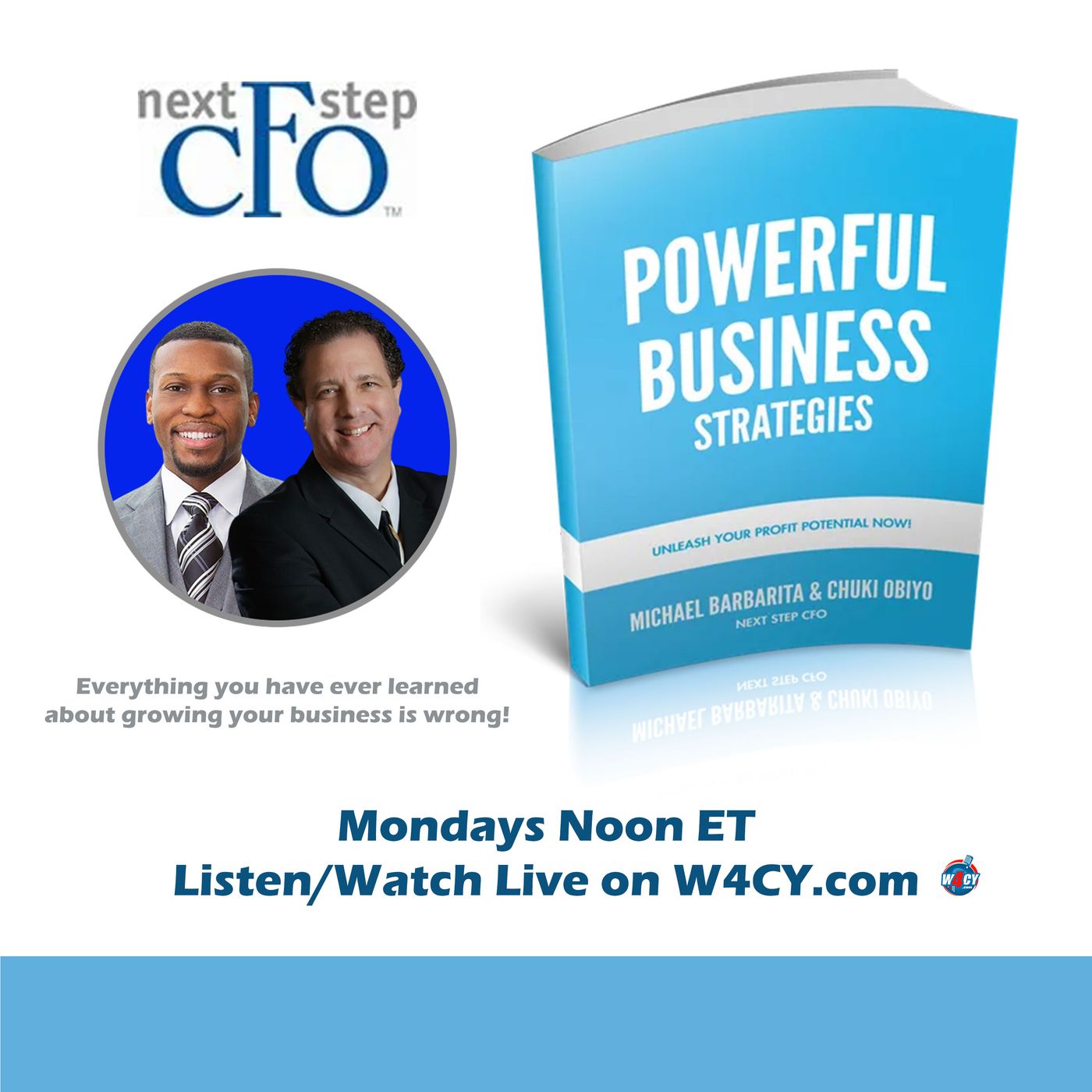
In this episode, Michael Barbarita and Chuki Obiyo reveal why most business owners are trapped working 60+ hours a week while seeing diminishing returns on their time investment. You'll discover the counterintuitive "Time Revolution Formula" that...
 iHeartRadio iHeartRadio
 Spotify Spotify
 Amazon Music Amazon Music
 Pandora Pandora
 Audible Audible
 Deezer Deezer
 Podchaser Podchaser
 Spreaker Spreaker
 Apple Podcasts Apple Podcasts
 Youtube Music Youtube Music
 Podcast Addict Podcast Addict
 JioSaavn JioSaavn
 Castbox Castbox
 Castamatic Castamatic
 Castro Castro
 Fountain Fountain
 Goodpods Goodpods
 Overcast Overcast
 PocketCasts PocketCasts
 Podurama Podurama
 Podverse Podverse
 Podyssey Podyssey
 RSS Feed RSS Feed
 YouTube YouTube iHeartRadio iHeartRadio Spotify Spotify Amazon Music Amazon Music Pandora Pandora Audible Audible Deezer Deezer Podchaser Podchaser Spreaker Spreaker Apple Podcasts Apple Podcasts Youtube Music Youtube Music Podcast Addict Podcast Addict JioSaavn JioSaavn Castbox Castbox Castamatic Castamatic Castro Castro Fountain Fountain Goodpods Goodpods Overcast Overcast PocketCasts PocketCasts Podurama Podurama Podverse Podverse Podyssey Podyssey RSS Feed RSS Feed YouTube YouTube
In this episode, Michael Barbarita and Chuki Obiyo reveal why most business owners are trapped working 60+ hours a week while seeing diminishing returns on their time investment. You'll discover the counterintuitive "Time Revolution Formula" that enables you to dramatically reduce working hours while simultaneously increasing productivity and profits. Learn how to identify and eliminate the invisible time traps that are keeping you chained to your business, and implement a proven system.
Powerful Business Strategies is broadcast live Mondays at 12 Noon ET Music on W4CY Radio (www.w4cy.com) part of Talk 4 Radio (www.talk4radio.com) on the Talk 4 Media Network (www.talk4media.com). Powerful Business Strategies is viewed on Talk 4 TV (www.talk4tv.com).
Powerful Business Strategies Podcast is also available on Talk 4 Media (www.talk4media.com), Talk 4 Podcasting (www.talk4podcasting.com), iHeartRadio, Amazon Music, Pandora, Spotify, Audible, and over 100 other podcast outlets.
Become a supporter of this podcast: https://www.spreaker.com/podcast/powerful-business-strategies--6198916/support.
0:00 The topics and opinions expressed in the following show are solely those of the hosts and their guests and not those of W FOURCY Radio. It's employees are affiliates. We make no recommendations or endorsements for radio show programs, services, or products mentioned on air or on our web. No liability explicitor implies shall be extended to W four CY Radio or it's employees are affiliates. Any questions or comments should be directed to those show hosts. Thank you for choosing W FOURCY Radio. Welcome to Powerful Business Strategies, where you will find out that everything you have ever learned about growing your business is wrong. Finally, a show where you'll learn the right way to grow your business by learning business and financial strategies that your competition isn't doing And now here is your host. President of NeXTSTEP CFO Michael Barbarita and joining Michael for today's show as an executive moderator is chooky obia.
1:00 Yes, this is chookey, and I believe that gratitude is undefeated and growth is about the next step. It is truly an honor for me to moderate today's discussion with my good friend Michael Michael, how. Are you welcome back? Chookey, welcome back. You know, I knew you'd come back in time to celebrate liberation data Wednesday love it. Yeah, it's all. About liberation for business owners. How about that? There you go? And as Jukie said, my name is Michael bob Rita, president of Next Step CFO. And next Step CFO is a fractional CFO and strategic implementation firm, and business owners hire us to double and triple that profit using business and financial strategies that their competition isn't doing. And our vision is to ensure that overwhelmed business owners achieve the time freedom what you're going to talk about today, and consistent profits to build a legacy and the life they decide.
1:55 Our mission is simple, is dedicated to guiding small business owners to leveraging their time, exploding their profits, and building a meaningful legacy. You know, the show Powerful Business Strategies in our book of the same name is a step toward accomplishing that vision and mission. So with that, I'd like to hand it back to my co author and moderate it for the show. Chicky Obio. Michael, I've got to say I'm particularly energized by today's episode, the Business Owner's Time Revolution, how to work half as much and get twice the results. Now that's an equation, Michael, that we can get behind, right, absolutely, God, So look a quick disclaimer before we jump in. Michael and I are both affiliated with a number of different organizations, and I currently serve as a managing director of business development for Veta Price, a global business focused law firm. In addition to that, I collaborate with Michael to moderate business roundtables and document powerful insights from those roundtables as part of our book, Powerful Business Strategies. But please note that the views expressed on this show are our personal views based on those success stories from the roundtables and interactions with business owners, and my mission as the Fearless moderator today is just to ask the right questions to help you the listener, learn the best business strategies that the competition isn't doing.
3:26 Back over to Michael, Thank you, Chicky. So here's something that I'd like to share that I've announced before, and so if you have a business problem that you'd like us to answer, or business question or even the strategy that you'd like to ask about, please email us at ask at NEXTSTEPCFO dot net. That's ask at NEXTSTEPCFO dot net. It doesn't matter what the business problem is or the question, and we'll answer it for you. There are a couple of things that we asked them, but one, please state whether it is something we can answer on the air or if it's confidential, and of course if it's confidential, we will put on the air. And there are two Please provide your phone number, because business problems can become a little involved and complex and we might need a little bit more context or clarity.
4:10 So that email address again is ask at NeXTSTEP CFO dot net. And I also want to point out that we've had some questions but they have requested confidentiality, which of course we will always honor. And so I'd like to. Say I always start the show at some type of inspiration, at least I hope it is. You know, business. Owners, you know, I see the long hours, I see the sacrifices, the weight of responsibility that you carry. You know, while large corporations have teams of specialists for every function under the sun, you're wearing multiple hats, you know, CEO, sales director, operations manager, and sometimes even the person answering.
4:52 The phones are sweaking the floors. But here's what I'd like you to know. Your size isn't a disadvantage. It's your super power. You can pivot faster, you can build relationships better, and implement innovative strategies without navigating layers. Of corporate bureaucracy. The strategies that we share on this show aren't just theoretical concepts, the battle tested approaches that level the playing field. And we believe that strategic thinking and financial mastery shouldn't be reserved for business owners with massive resources. That's exactly why Chucky and I wrote powerful business strategies and exactly why we do this show. So today we're just sharing tools that create small businesses into mighty competitors. And your passion you're committed, combined with these strategies creates an unstoppable force.
5:44 So let's harness that power and revolutionize your business starting right now. Absolutely so, business owners take a moment and ask yourself, did you start your business to work more hours than you ever did as an employee? Did you start your business to me is your kids' games and with titos to be exhausted at the end of the day that you have nothing left for your family or yourself. Of course you didn't. You started your business to gain freedom, both time freedom and financial freedom. Yet for most entrepreneurs, that dream has morphed into a reality where you're working harder than ever, you're experiencing more stress than ever, and ironically have less time freedom than your own employees. Today, we're changing that the chair the exact strategies that mote the most successful businesses use to work half as much while getting twice the results. Your business should serve your life, not consume it.
6:46 So let's start your time revolution today, and let me start with a start reality. I mean, according to a recent survey, the average business owner works fifty two hours a week, with nearly twenty five percent of those business owners working more than sixty hours. That's fifty percent more than the average employee works. And yet study sh other that productivity sharply declines after fifty hours, with almost no additional output. After fifty five hours. So, in other words, most business owners are working themselves to exhaustion for diminishing returns. They're trapped in what I call the time effort paradox. It's the false belief that working more hours equals more success. I experienced this firsthand with my own business. Believe me, I understand this, and I listen. I need to listen to my own advice.
7:43 I'm working seventy plus hours a week and time is the only true resource that we have. You know, you can always make more money, but you can never make more time. And if your business requires that constant presence to succeed, you don't own a business, you own a job. The realization has led me to develop that what I call the Time Revolution formula. This is a systematic approach to reclaiming your time while improving your business results, and it starts with a fundamental mindset shift. You see, most business owners operate from a time for money mentality. They believe that their value comes from the hours they put in.
8:35 But truly successful entrepreneurs understand that their value comes from the results they create, not the time they spend. You can think about this way. If you can achieve the same or better results than half the time, why wouldn't you? I mean the problem is that most of us just don't know how to make that happen. We're trapped in outdated patterns of work that keep us busy but not necessarily productive. So the Time Revolution formula breaks this pattern by focusing on three core principles. First, leverage, This means getting disproportionate results from your time investment. True leverage allows one hour work to produce five to ten hours of results.
9:28 Second is elimination. This means rulelessly removing activities that don't contribute meaningfully in any kind of meaningful way and any kind of meaningful value to your business. Most entrepreneurs spend at least forty percent of their time on tasks that could be completely eliminated. The third is automation. This means creating systems that generate results without your ongoing involved It a truly successful business continues to operate whether you're there or not. And by the way, part of that automation today is in fact utilizing artificial intelligence. And so when you apply these three principles across business, something really magical happens.
10:23 You start working less while achieving more, Your stress levels decrease while your profitability increases, and perhaps most importantly, you reclaim the freedom that inspire you to start your business in the first place. So throughout today's show, I'll walk you through exactly how to apply these principles to transform your relationship with time and your business. And we'll uncover the invisible traps that are keeping you chained to your business, and I'll share specific strategies to break free from those traps once and for all. And there's a question. Hold on a second, there's a question from the audience. You mentioned that most business owners spent at least forty percent of the time on tasks that could be eliminated entirely.
11:17 That's right. Can you give us a specific example of what those activities might be. Let me see. Well, one of the biggest time wasters that I see across nearly every business is what I call reactive management. This is when business owners spend hours each day putting out fires, responding to non urgent emails, and handling issues that someone else on the team could address. For example, I worked with a general contractor who was spending three to four hours every day answering basic customer questions and fielding routine service requests. And when we analyze these interactions, we've discovered that over eighty percent of them followed predictable patterns that could be handled by a customer service script.
12:06 So we created a simple decision tree. It was like an outline for his office manager to handle these requests, and suddenly this owner reclaimed fifteen to twenty hours a week time he now uses to focus on high value business development activities that only he can do. And the key insight is that many business owners confuse being needed with adding value just because just because so needs your input doesn't mean you're the only one who could provide that input. So by creating systems and empowering your team, you can eliminate those time consuming, low value activities while actually improving the customer experience because it's just not a one man bank. Okay, So let's dive deeper into the first principle of the time revolution formula that we talked about, and that's leverage. So leverage is about multiplying the impact.
13:10 Of your time. It's the difference between using a shovel and using a bulldozer. Both can move dr it, but the bulldozer creates dramatically more impact per hour of effort. You see, in business, there are five primary forms of leverage available to every business owner, regardless of your industry. The first is people leverage. That means building a team that can produce results without your constant involvement. Most business owners make the critical mistake of hiring for tasks rather than outcomes. When you hire someone to handle bookkeeping task, you still need to manage them. But when you hire someone to deliver the outcome of accurate, timely financial reporting, that's when you create that true leverage.
13:56 The key to people leverage is what I call train, the te train and trust model. You see, most entrepreneurs either undertrain their team and then micromanage them, or they undertrain them and just hope for the best. Both approaches destroy the leverage or reduce the impact of the leverage substantially. Instead, you should invest heavily in front loading, training, and creating clear success metrics, and then step back and trust your team to deliver the results. This creates a virtuous cycle where your team becomes more capable over time, requiring less of your involvement. The second form of leverage is systems leverage.
14:44 This means creating documented processes that produce consistent results regardless of who follows them. The most valuable asset in your business isn't your client list or your equipment, it's your systems. So affect of systems transform and change. Tribal knowledge, and tribal knowledge is like information stored in people's hands, and it transforms that tribal knowledge into organizational knowledge, which is information available to everyone. And this creates tremendous leverage because the system can be executed by multiple people across your organization. So to give you an example, a commercial cleaning company was completely dependent on the owner for client walkthroughs and quality inspections, and by creating a detailed walkthrough system with photos and videos and checklists, they were able to train their supervisors to handle these inspections with the same attention to detail as the owner, and I bet even more and then breed up fifteen hours per week of the owner's time, allowing him to focus on what high value activities like strategic growth initiatives. The third form of leverage is technology leverage. This means using software tools to automate repetitive task and decision making. The right technology can literally work for you twenty four to seven without breaks, without complaints or vacations.
16:14 You know. Here's an example. A landscaping company was spending ten plus hours weekly creating custom proposals for potential customers, and he implemented software with pre built templates and an integration to this CRAM. Now, proposals that used to take an hour just take ten minutes, and the quality and consistency have actually improved now. The fourth form of leverage is financial leverage. This means using other people's money, resources, or assets to accelerate your results. Many business owners limit their growth by using their own capital and resources. Strategic partnerships, vendor financing, revenue sharing agreements, and other creative financial structures could dramatically accelerate your growth without requiring your own personal time investment. Interesting example, a retail store owner wanted to expand to a second location, but didn't have the capital. Instead of taking on this debt, they created a revenue sharing partnership with a complementary business.
17:22 This partn that provided this space and some starting inventory in exchange for a percentage of sales, and the result was a second location that required a minimal capital investment and about a third of the time it would take to have actually launched it independently. And the fifth and final form of leverage is knowledge leverage. This means learning from others experiences rather than relying solely on your own trial and error, because every problem you're facing in business has been solved by someone else already. Mastermind groups, business consultants, and coaches in this street, associations and even books like powerful business strategies are forms of knowledge leverage.
18:09 They allow you. To compress years of learning. It's a month or even weeks. Now let's talk about how to apply these forms of leverage in your business. It starts with a simple but powerful exercise I call time value analysis. So first track all your activities for one week, noting exactly how you spend each hour, and be brutally honest with yourself. By the way, because no one else needs to see this, categorize each activity as either ten dollars hour, ten dollars an hour work, one hundred dollars an hour work, or one thousand dollars an hour work, and even ten. Thousand dollars an hour work. And this categorization isn't about what you'd pay someone else to do. It's about the actual value that the activity generates for your business today.
19:01 So ten dollars an hour. Activities are routine tasks that must be done but don't direct you know, don't directly generate value like, for example, the basic bookkeeping I talked about earlier order processing. One hundred dollars an hour activities contribute to business operations and may indirectly generate revenue, like team management or systems improvement. A thousand dollars per hour activities directly impact revenue or profitability like sales calls with qualified prospects of strategic planning. Ten thousand dollars an hour activities are the true points of leverage that can just really exponentially grow a business, like developing a new product line or creating strategic partnerships.
19:46 So after doing this, most business owners are shocked to discover that they spend seventy to eighty percent of their time on ten dollars an hour and one hundred dollar hour activities and less than five percent on ten thousand dollars activities. Wow, well, it's amazing. So the time of Lucia begins when you commit to eliminating, delegating, or automating anything that isn't one thousand dollars or ten thousand dollars an hour work for you personally, This single shift can transform your productivity and reclaim twenty to thirty hours of your week. Michael, it's interesting, right, And as you know, as part of our experience with the show, we have a number of business owners that tune in and folks are very participative.
20:30 You know, they're sending questions, sending comments. I've actually got to share a consolidation of some comments with you. Here is a question, So, Michael, some business owners might say they can't afford to hire people to handle the ten dollars an hour or even the one hundred dollars an hour tasks and action items. How would you address that concern? That's excellent, Well, it actually speaks to one of the most common misconceptions about delegat The truth is, you can't afford not to delegate these taxs, tak Let me explain. I hope this is simple math. So let's say your business generates three hundred thousand in an annual revenue, which means your time as the business owner is worth about one hundred and fifty dollars an hour, assuming a two thousand hour a work week, And if you're spending twenty five hours a week on ten dollars an hour and one hundred dollars an hour task, you're effectively losing between one thousand, two hundred and fifty and thirty five hundred dollars weekly in opportunity costs, and when you.
21:32 Frame it in this way, hiring somebody at twenty to. Twenty five dollars an hour to handle these tasks becomes an obvious investment, not an expense. Even if you only delegate ten hours weekly initially, that's ten more hours that you can dedicate to high value activities that actually grow the business. But let me. Let me also address the deeper issue here, because many business owners claim that they can't afford to delegate, but the real issue is they just haven't created the systems that allow for effective delegation. Because without clear processes and success metrics, delegation feels risky and often fails. So the solution is to stop small. Identify one routine task that consumes two to three hours weekly, document exactly how you do it, including decision points and quality standards, and then find someone could be a part time assistant or a virtual assistant for a few hours weekly to handle justice task.
22:35 Once that's working smoothly, go to the next one. This incremental approach allows you to build your delegation muscle without over committing financially, so within three to six months, you systemize a delegated enough ten dollars and one hundred dollars an hour work to fundamentally change how you spend your time. And remember the goal is to hire people to do everything at once thematically free yourself from low value work so you can focus on the activities a truly drive your business forward. And Michael, I want to pick up on that point. We actually have a question from a listener. So you've mentioned the five forms of leverage, but which one, based on your experience, do you find most business owners either neglect or underutilize.
23:26 Yeah, well, without question, it's systems leverage, because it's just most entrepreneurs intuitively understand the value of hiring good people or investing in technology at least intuitively, but creating documented, repeatable systems often feels tedious or unnecessary until it becomes absolutely critical. And the e myth that book called the Emath tells you all you need to know about the importance of systems. And by the way, Stott is a little nugget and a little timp that can go a long way. Stot using AI to create your systems. So that's really important because the reality is without systems, Your business completely depends on you or specific team members, which creates enormous vulnerability.
24:19 If you. Are a key employee, gets sick, goes on vacation, leads the company suffer. Is the business suff is right away. And moreover, a lack of systems creates what I call decision fatigue because when there's no standard process for handling common situations, every instance requires somebody to make a new decision, and most employees are afraid to make decisions so you can figure out see what happens then, And this is incredibly draining for business owners and significantly limits their ability to focus on strategic activities, which is what you and I Chicky wants them to focus on. We want them to focus on strategic activities and strategic activities for example, like the seven step path Way to Profit formula that we did a show about. And so the good news is that creating effective system doesn't have to be overwhelming.
25:16 Just start with your most. Common repetitive process and the ones that you find yourself doing or explaining over and over again, and document each step, noting decision points and quality standards. Use video, audio, or written formats, whatever works best for you and your team or remember also use AI as. An assistant for this. It'll cut your time and your perception of how difficult system creation is. In an unimaginary way. And so then test the system by having someone follow it exactly is documented, refine it based on their feedback and results, and once it's working consistently, you've created a valuable business asset that will generate reach turns indefinitely.
26:03 And so remember the goal of systems is a rigidity, it's freedom. Good systems free you from routine decisions and actions. While ensuring consistent quality. They have the foundation of a business that can operate without your constant presence. Interest in Michael, good systems lead to that liberation that you talked about right for Liberation Day. So that's remarkable. We've got a question here from a business owner. So, Michael, you've talked about identifying ten thousand dollars hour activities that can exponentially grow a business. Could you give us some examples, specific examples of what some of these might look like, particularly across multiple industries.
26:47 Yeah, let's see. Well, well, for service fins essays like consultants, lawyers or accountants, ten thousand dollars our activities you know include things like creating intellectual property that can be leveraged across multiple clients, are developing premium service offerings with significantly higher profit margins, and building strategic referrable partnerships with complementary complementary professionals who serve the same client base. For retail or e commerce businesses, ten thousand dollar activities could include negotiating exclusive product lines that differentiate you from your competitors. It could include developing automated marketing funnels that consistently convert browsers to buyers and create customer retention programs that increase lifetime value. For construction or trades businesses, ten thousand dollars an hour activities include creating estimation systems that improve profit mondins on every project, developing recurring maintenance programs that generate predictable monthly revenue, and building relationships with developers general contractors who can provide consistent, large scale work and even For manufacturers, ten thousand dollar activities include streamlining production processes to reduce the cost while maintaining quality, developing new product lines with higher margins, and creating distribution partnerships and open new markets without significant overhead. So, regardless of the industries, strategic planning is always a ten
28:19 thousand dollars hour activity, and most business owners get so caught up in the day to day operations they never step back to work on their business rather than in it. And yet a single day of focused strategic planning can generate hundreds of thousands of dollars in additional profit over the following year. And the key to identifying your personal ten thousand dollars per hour activity is to ask yourself this question, what could I do today that would continue generating results for years with no additional time investment from me. Those are your true leverage points. So before we. Continue our discussion, let's take a ninety second break. Hey there, business owners, let me ask you something. Are you tied of blending in with your competitors? Frustrated with slow growth and slim margins?
29:08 Well, I've got news for you. Everything you've ever learned about growing your business is wrong. But don't worry. I'm here to let you in. On a secret weapon, your position of market dominance. It's what sets you apart, makes you irreplaceable, and has customers lining up at your door. My name is Michael barber Rita from Next Step CFO. I know what you're thinking. Sounds great, Michael, but how do I find my position of market dominance? Well, that's exactly why we've created our game changing impleventation program called Next Step to Market Dominance. In just ninety days, we'll guide you step by step to a position of market dominance by uncovering your unique strengths that competitors can't touch. By crafting a message that resonates deeply with your ideal customer, by building a strategy that turns you into.
29:57 The go to expert in your field. So this is in theory. These are battle tests and strategies that have help businesses like yours double, triple and quadruple their revenue. Don't let another quarter go by struggling to standout. It's time to dominate your market period. Go to NEXTSTEPCFO dot net forward slash contact. Fill out the form and in the message section put the word dominate or call us at seven eight one three two six three A two two. That's next step CFO dot net forward slash contact or call us at seven eight one three two six three A two two. So welcome back, and remember you can always catch the replay of any of our shows at Powerful Business Strategies dot com. So let's explore the second principle of the time revolution formula, which we call it is even more powerful than delegation because it completely removes tasks from your business rather than just shifting them to someone else.
31:00 And as management expert Peter Drucker famously said, there is nothing so useless as doing efficiently that which should not be done at all. And so in our experience working with hundreds of business owners, there are five major categories of activities that can be eliminated from most businesses which zero negative impact on results. And so the first category is what I call perfection tasks. And these are activities that you're investing time to move from good enough to perfect, but the additional quality isn't valued by customers, it doesn't impact outcomes. For example, an interior designer, this particular interia designer was spending five to seven hours creating elaborate presentation boards for their initial client consultations, and when she surveyed her clients, she discovered that they valued her ideas and expertise and not.
31:59 The press citation format. And so by switching to digital mood boards that took only ninety minutes to create. She stayed over twenty hours monthly with no impact on her closing rate. So you've got to. Ask yourself where am I investing time and perfection that doesn't actually matter to my customers or improve my results. The second category is low probability opportunities, and these are activities that have a theoretical payoff but a very low probability of success based on your specific situation. And we see this frequently with networking events and certain marketing activities and pursuing clients that don't match your ideal customer profile.
32:42 Business Owners often continue these activities out of habit or hope rather than evidence of results. A retail a business owner was spending eight hours monthly attending a networking group that it actually generated did zero business over a year. So by elimitting this single activity, he reclaimed a full day each month that he now uses for other high impact marketing activities. So ask yourself what activities am I continuing despite little or no evidence that the generating results. And the third category is unnecessary reports and meetings, and these are information sharing activities that consume time without driving decisions.
33:29 Or actions. You see in our experience, at least fifty percent of recurring meetings in most businesses can be eliminated or drastically shortened with no negative impact. Similarly, many reports are created out of habit rather than necessity. So a manufacturing company was having daily thirty minute production meetings with their entire team. By creating a simple dashboard that tracked key metrics in real time, and they were able to reduce meetings to twice a week, twice a week for just fifteen minutes, saving two hours a week for everyone involved while improving information flow. So ask yourself what meetings or reports exist in my business that don't directly lead to better decisions or actions. And then the fourth category is manual processes that could be automated, and these are repetitive tasks that technology can handle. More officially, and this includes everything from appointments, scheduling and follow up emails to invoicing and payment processing.
34:32 Modern software can automate these processes at a fraction of the cost of you and time, and so that you really need to take a look at that and ask yourself what repetitive, predictable processes am I or my team handling manually that could be automated. And then the fifth and final category is misaligned clients, which are customers who consume disproportionate time relative to their value to their business. I mean, you know the ones I'm talking about. They call constantly with minor issues, they haggle over every invoice, they pay late, and generally make your life miserable. And what many business owners don't realize is that these clients not only consume your time, but they drain your energy and prevent you from serving your best clients optimally. And so ask yourself this question, which which clients consistently require more time and energy than their worth? And would you rather have those? I would you rather have and continue to service those exhausting the clients that exhaust you, or let your competitors have them? I always ask that question to my clients. Yeah, competitors had those lousy So the elimination stops with a simple but powerful exercise I call the stop doing lists. So take out a sheet of paper,
36:02 write down ten activities you'll stop doing entirely, be specific instead of just writing, stop wasting time right, stop attending the Thursday morning networking meeting, or stop personally handling customer service emails, and this exercise forces you to make concrete decisions about elimination rather than vay comments. Once you have your list, communicate the necessary changes to your team and clients, and then stick to your commitments. The immediate impact of elimination is just you know, it's often even more powerful than delegation because well, it creates space in your calendar and your mind without requiring any additional systems or costs.
36:45 Michael, look, I think you are inspiring a number of business leaders and owners with this concept of elimination, right, I mean, stuff is remarkable. The idea of eliminating misaligned clients really resonates, right, But many business owners are, in all honesty, afraid to let any client go without that kind of engagement, right, and especially in on certain economic times. How do you advise business owners to overcome this fear. Well, that's a great question, Shokey, because it gets to the heart of the scarcity mindset that keeps many business owners trapped in unfulfilling client relationships. And the scarcity mindset is something we talked about when we talked about preparing for an economic downturn. The key is to approach this systematically rather than emotionally, and you have to stop by conducting a thorough analysis of your client base and plot each client on a chart with.
37:43 Two axisy access. Access number one is profitability how much money do they generate relative to the resources they consume, and the second axis is alignment how well they matched ideal client profile and value. And this analysis often leads to surprising insights. Clients you thought were valuable might actually be barely profitable than you account for all the time that when you account for all the time and resources that they consume. And then conversely, quieter clients who rarely demand attention might be your most profitable relationships. And once you have this data, make decisions based on facts rather than fears. For clients in the bottom left quandrant that's low profitability, low alignment, and develop a transition plan. And this doesn't mean abruptly ending relationships. It means thoughtfully moving these clients to providers who might serve them better and start with candid conversations.
38:46 You know, I've been reflecting on our work together. I feel you might be better served by a provider who specializes more precisely in what you need and the other specific recommendations for alternative and offer specific recommendations for ALTERNI providers and for clients who are profitable. But misaligned. Or aligned but unprofitable, consider adjusting your service model or pricing to improve the relationship. Sometimes a fifteen or twenty percent increase or a modified service scope can change a challenging client into a more valuable one. And the fear of letting clients go off and stems from the belief that you can't replace them.
39:27 But here is the reality. The time and energy you reclaim by transitioning misaligned clients can be reinvested in acquiring the ideal clients who are more profitable and more enjoyable to serve. That's a good point. So, Chucky, do we have a quessure from a listener? We actually do writing and Michael, look, your insights today are really reverberating. So here's a question. What's the biggest mistake you see business owners make when trying to reclaim their time? Well, you know, business owners actually tell me that that you know that things are crazy right now.
40:12 I mean, I won't say that. The biggest mistake that I see is the belief that somehow, next week or next month will be different from the current one. Without making structural changes to how this works, you know, they'll say that things are crazy. But without implementing the principles that we're discussing today, that magical period of more time, it never comes. It never arrives. There's always another project, another crisis, another opportunity that conserves consumes every available minute. The reality is that your calendar will always folk to capacity unless you create structural boundaries and systems to protect your time. This requires hard decisions about what deserves your attention and what does it.
40:56 The solution is actively. Blocking time for your highest value activities before anything else can claim that valuable time. So stop by scheduling blocks for strategic work, business development, and personal renewal. Make these appointments with yourself as non negotiable as you as you would with your most important clients, you know, meetings with them. Then allow other activities to fill in around these protected blocks, not the other way around. So tricky can we go to Can we jump to compliments as we're seem to be running out of time?
41:39 Absolutely we can. And Michael, look, it's really interesting. This complements segments because we have a number of business owners that we are energized to spotlights. So four compliments today. First compliments to Gary Agaginian, the founder and CEO of Agagenian Incorporated. Gary is recognized as the greatest wine lagochon in the world. He graduated from the School of Agricultural Business at California State University, Fresno, and he grew up Michael on the family vineyard in California. I mean, he's got decades of experience with his own agricultural operation and he began making wine in nineteen ninety eight. In fact, the business Michael traces its roots all the way back to nineteen twenty two when Gary's grandfather planted forty acres with wine grapes and raisin grapes.
42:38 Look, Gary and. His team have a wall class quality service, a certain genes Aquah Michael that they bring to every customer interaction. You can learn more about this great company at Agajanian dot com. Again, that's Agaganian dot com. Second compliments Christopher Ryan, who's the managing part partner at DSRCPA. That's D for Donovan, S for Sullivan, R for Ryan. Christopher has fifteen plus years of experience in accounting and He serves a wide range of clients, including small businesses, well established companies, insurance agencies, professional services firms, high net worth individuals and families. Part of what makes Christopher and his team so special, Michael, is their values. They've got this PRQ commitment P for professionalism, R for responsiveness, Q for quality. You can visit the team today at DSRCPA dot com. Third compliment complements to Lars bo Lourdson, Thomas Lourdson and Nils Lourdson. They are the principles of Unmutes. This is a Denmark based company with a US sidiary. Unmute Frames provide an experience that is.
44:06 Incomparably brilliant, Michael. They have unique pieces of artwork that they put up on your wall and these frames are embedded with sound. You just press the frame and Unmute comes to life, bringing a rich, vibrant sound into the space for your home or your business. This is such an awesome experience. Check these folks out at Unmuteframes dot us. Final compliment this goes out to Mike Bogart, the founder and owner of the Bogart Finish. Mike has spent decades cultivating his craft in high end custom home construction and renovation. Mike is a true passion not only for how things are built, but how things are built to last. Michael in two thousand and seven when Mike founded the Bogart Finish. This is a company that truly connects the commitment to craftsmanship, clients trust, and project management with the quality service and care for every single clients mindset. You can find out more about the good work Mic and team are doing at the Bullgart Finish dot com. Michael back over to you.
45:26 Thank you, Jerkey. I love I love these compliments. So now let's explore the third principle of the time revolution formula called automation. And unfortunately, because of time, I'm going to have to go very quickly through this. But automation is about creating systems that generate results without your ongoing involvement. You know, it's the closest thing to business magic. Setting up processes that continue working for you is twenty four to seven, whether you're at the office, on vacation of sleeping, and in today's digital economy, automation opportunities exist exist for businesses of all sizes and across all industries, and you don't need a massive technology budget or a team of engineers. You just need to identify the right automation opportunities and implement them strategically. And what we find is there are five primary categories of automation that reclaim your time. The first is marketing automation. This includes everything from email sequences and social media social media scheduling to actual lead nurturing and customer onboarding. The second category is sales automation. This includes proposal generation, appointment scheduling, contract creation, and payment processing. The third category is operations automation. This includes inventory management, workflow coordination, quality control checks, and data entry.
46:58 A manufacturing company implement that this exact system and with bar code scanning and inventory management software that automatically tracks materials usage and reordered supplies when they reach these certain thresholds, and this eliminated weekly manual inventory counts, emergency supply runs and say six to seven hours weekly and actually also reduced stockouts by ninety two. The fourth category is financial automation. This includes invoicing, expense tracking, financial reporting, and collections. And the fifth category is customer service automation. This includes.
47:39 Frequency frequently asked questions systems supporting ticket routing, satisfaction surveys, and review generation. And let's see and let me, let me, let me explain that. Moreover, automated systems can operate at scale that would be impossible manually. And once again, please consider using AI. There are some great AI tools that can help you with creating these automated systems. And they can send personalized message to thousands of customers simultaneously, monitored across multiple locations in real time, or analyze data points that would take humans weeks to process. And the key insight about automation is that it's most powerful when it handles routine tasks while freeing humans to focus on high value activities that require creativity, judgment, and personal connection. And the goal is it just to automate everything, is to automate what should be automated, so that you and your team can focus on.
48:51 What shouldn't be. Brilliant Jukie, is there a question from the audience? I think we captured it all. Oh kay, look, I mean this thing was this thing was such a resonant episode. We may have to extend this out in a future episode. We might, We might well. As we wrap up today's episode on the business Owner's Time Revolution. Let me summarize the key insights that were covered. We introduced the time revolution formula based on three core principles. First, leverage. First, leverage is leveraging and that's getting dispar a portionate results from your technology, financial resources.
49:39 And knowledge. And remember that time value analysis to identify that ten dollars an hour, one hundred dollars an hour, thousand dollars an hour, and ten thousand dollar an hour activities because your goal is to focus exclusively on the highest value activities while leveraging other resources for everything else. And second is elimination, so that's removing unnecessary activities from your business entirely. We identified five major categories that could be eliminate affection tasks, Second is low probability opportunities, Third is unnecessary reports and meetings. Forth is manual processes that could be automated. And then finally we talked about misaligned clients and remember to create your stock doing list to make concrete elimination decisions. And then third is automation create systems that actually generate results without your ongoing involvement.
50:32 We exploit but five categories. Net was marketing, sales, sales, operations, financial and customer service. And remember the automation roadmap. Identify repetitive processes, document current workflows, evaluate automation options, implement and tests in power, and then refine and expand. To get a copy of the book Powerful Business Strategy, simply go to our website www dot NEXTSTEPCFL dot net. It's totally complimentary and until next Monday at noon Eastern time for Chucky Obio. My name is Michael Barbarita, and remember, don't keep doing what your competition is doing.
51:21 You have been listening to Powerful Business Strategies finding out that everything you ever learned about growing your business is wrong. Tune in next week and every week at noon Eastern time on W four CY Radio with your host Michael Barbarita of Next Step CFO and moderator Chugy Obio


