
The Business Owner's Blueprint: Creating Systems That Scale Without Sacrificing Quality
 iHeartRadio iHeartRadio
 Spotify Spotify
 Amazon Music Amazon Music
 Pandora Pandora
 Audible Audible
 Deezer Deezer
 Podchaser Podchaser
 Spreaker Spreaker
 Apple Podcasts Apple Podcasts
 Youtube Music Youtube Music
 Podcast Addict Podcast Addict
 JioSaavn JioSaavn
 Castbox Castbox
 Castamatic Castamatic
 Castro Castro
 Fountain Fountain
 Goodpods Goodpods
 Overcast Overcast
 PocketCasts PocketCasts
 Podurama Podurama
 Podverse Podverse
 Podyssey Podyssey
 RSS Feed RSS Feed
 YouTube YouTube iHeartRadio iHeartRadio Spotify Spotify Amazon Music Amazon Music Pandora Pandora Audible Audible Deezer Deezer Podchaser Podchaser Spreaker Spreaker Apple Podcasts Apple Podcasts Youtube Music Youtube Music Podcast Addict Podcast Addict JioSaavn JioSaavn Castbox Castbox Castamatic Castamatic Castro Castro Fountain Fountain Goodpods Goodpods Overcast Overcast PocketCasts PocketCasts Podurama Podurama Podverse Podverse Podyssey Podyssey RSS Feed RSS Feed YouTube YouTube
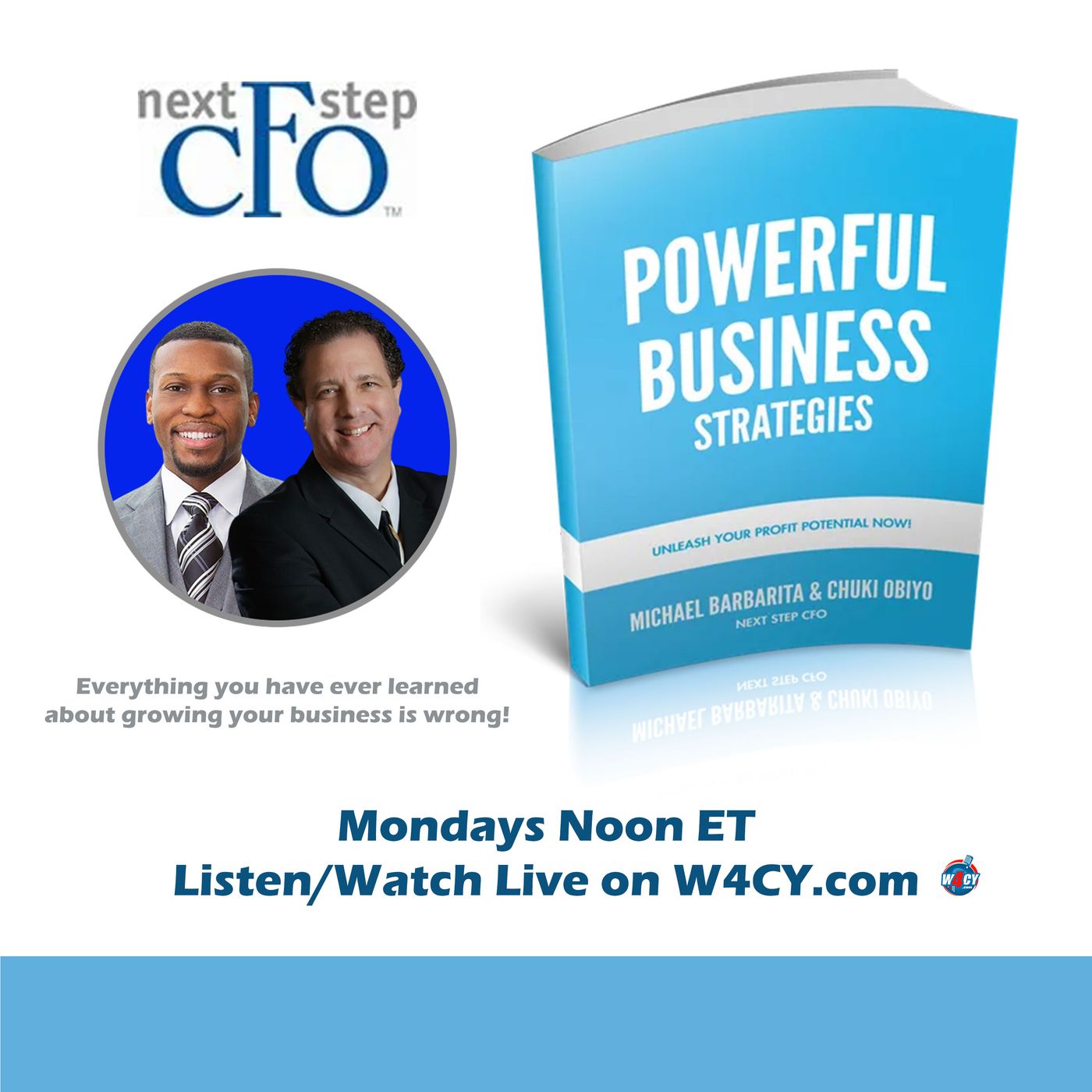
In this eye-opening episode, Michael Barbarita and Chuki Obiyo reveal why most business owners remain trapped in day-to-day operations despite working harder than ever. You'll discover the counterintuitive "Systems Blueprint" that enables owners to build scalable processes without sacrificing the quality their customers expect. Learn how to change your business from owner-dependent to systems-dependent while maintaining the excellence that sets you apart from competitors.
Powerful Business Strategies is broadcast live Mondays at 12 Noon ET Music on W4CY Radio ( www.w4cy.com ) part of Talk 4 Radio ( www.talk4radio.com ) on the Talk 4 Media Network ( www.talk4media.com ). Powerful Business Strategies is viewed on Talk 4 TV ( www.talk4tv.com ).
Powerful Business Strategies Podcast is also available on Talk 4 Media ( www.talk4media.com ), Talk 4 Podcasting ( www.talk4podcasting.com ), iHeartRadio, Amazon Music, Pandora, Spotify, Audible, and over 100 other podcast outlets.
Become a supporter of this podcast: https://www.spreaker.com/podcast/powerful-business-strategies--6198916/support .
0:00 The topics and opinions expressed in the following show are solely those of the hosts and their guests and not those of W FOURCY Radio. It's employees are affiliates. We make no recommendations or endorsements for radio show programs, services, or products mentioned on air or on our web. No liability explicitor implies shall be extended to W FOURCY Radio or its employees are affiliates. Any questions or comments should be directed to those show hosts. Thank you for choosing W FOURCY Radio. Welcome to Powerful Business Strategies, where you will find out that everything you have ever learned about growing your business is wrong. Finally, a show where you'll learn the right way to grow your business by learning business and financial strategies that your competition isn't doing. And now here is your host. Resident of Next Step CFO Michael Barbarita and joining Michael for today's show as an executive moderator is chooky obia.
1:00 Yes, this is trueg In I believe that gratitude is undefeated and growth is about the next step. It is an honor for me to moderate today's discussion with my good friend Michael. Michael, how are you fantastic chok. Hope you're doing well. My name is Michael Babarita, President of Next Step CFO, and next Step CFO is a fractional CFO and strategic implementation firm, and business owners hire us to double and triple their profit using business and financial strategies that their competition isn't doing. And our vision is to ensure that overwhelmed business owners achieve consistent profits. That leads to the time, freedom to build a legacy, and the lifely desire. Our mission is dedicated to guiding small business owners to leveraging their time, exploding their profits, and building a meaningful legacy.
1:50 The show Powerful Business Strategies in our book of the same name, is a step toward accomplishing that vision and mission. So with that, I'd like to hand it back to my co author and moderated show Chocky Obia. Michael, I've got to say I'm quite inspired by today's episode. I mean use one of my favorite words, blueprints. So the title for today's episode is the business owner's blueprint creating systems that scale without sacrificing quality. And just before we get started, folks, quick disclaimer, Michael and I are both affiliated with a number of different organizations. I currently serve as a managing director of business development for Vetterprice, a global business focused law firm. In addition to that, it's truly energizing to collaborate with Michael to moderate business roundtables coast to coast and then document the insights from these roundtables as part of our book, Powerful Business Strategies.
2:44 But please note that the views expressed on this show are based on personal views from these very successful stories and experiences across different business owner conversations. Now look my mission as a fearless moderator to ask the right questions to help you, the listener, learn the best business strategies that the competition isn't doing. With that, back over to Michael. Thank you, Chicky. So before we dive in, I want to share something that's been quite frankly, it's been on my mind lately. As business owners, we often feel like we're climbing a mountain with no summit insight, that the daily demands feel endless, and sometimes we want to be if all this effort is really worth it. But let me tell you somebody, the businesses that truly change lives.
3:32 I'm built on constant hustle. They're built on intelligent systems that multiply your impact. The most successful business owners I've worked with didn't just work harder, they created blueprints that allowed their vision to scale beyond their personal limitations. And today we're going to show you exactly how to do that. Because your business should be a vehicle for the life you want, not a prison that keeps you from living it. So today we're tackling a challenge that affects virtually every business owner I've ever worked with, and that is how to create systems that allow your business to scale without sacrificing the quality that makes your business special in the first place. So let me start with a question for everyone listening. Are you replaceable in your business? And I don't mean that as either a compliment or an insult.
4:28 What I'm really asking is could your business function for a month without you being involved in daily operations. For most business owners, that honest answer is no. That's a dangerous place to be. And I see this pattern over and over again. A talented individual stat's a business based on their skills or expertise. They deliver exceptional results, The word spreads, the business grows, but there's a problem. Everything depends on the owner. The quality, the customer relationships, the problem solving it all runs to the one person, and that creates a ceiling on growth it's almost impossible to break.
5:17 I think you're on mutube gate. I think you're unmute. Oh no, Michael, I was just gonna say, sorry, that's remarkable, right. I think a lot of business owners can relate to what you've just expressed. But I do have a key question for you, though. What's the mistake, the big mistake that business owners make that just kind of keeps them trapped in that situation. Well, the cheman sake. It's confusing standardization with the loss of quality. You see. Yeah, you know, most business owners believe their personal touch is what makes their product or service special. And there's some truth to that, especially in the early days, but they make the critical error of thinking, if I systematize this, it'll be generic and what makes it special, and that could be more wrong. The truth is that proper systems don't diminish quality. They guarantee it consistently. So think about it.
6:18 The most renowned businesses in the world, from luxury hotels to find restaurants to premium car manufacturers, they all have exacting systems that ensure consistency, and those systems don't make the experience worse, they make it reliably excellent. Let me share an example. A high end custom cabinet manufacturing company. Business owner for years personally inspected every project before delivery, and when it was suggested to create a standardized quality control system that would allow other team mendors to handle inspections, it was pretty skeptical. He said, no one has my eye for detail, And after a lot of arm wrestling, they developed a comprehensive checklist system with detailed photographs showing acceptable versus unacceptable quality markers. Within three months, his quality control manager was catching issues that even the owner had occasionally missed, and the quality actually improved and the owner gained back fifteen hours per week.
7:28 Wow, that is fascinating. And Michael, hopefully you can hear me, okay, correct I can't. Yeah, Okay, So I've got to ask, like, so are you saying, Michael, like like systematizing can actually improve quality and then free up and owner's time. That's what I hear you saying. But I do have a question related to this, So why do you think so many business owners resist this approach. Well, comes down to a couple of things, identity and fear. You know, most business owners wrap their identity into being the hero who solves all the problems. There's an ego boost in being the indispensable expert. And there's also legitimate fear fear that systems will make the business feel corporate or impersonal. Fear that customers will notice a difference, Fear that employees can't be trusted with crucial decisions. But here's the reality of the situation. Until you create systems that allow the business to function without your constant input, you don't have a scalable business model, and you have a job, and often one with horrific hours and overwhelming responsibilities. So today we're going to show you how to create what I call these systems blueprint, a framework for transferring your expertise into scalable systems without losing what makes your business special.
8:50 And we'll dive into the first key component, identifying your business's critical functions and creating process documentation that actually gets used. So I'm going to introduce you to this concept, to the system's blueprint, our framework for creating scalable processes that don't sacrifice quality. The first step is what I call function mapping, which is systematically identifying every critical function in your business. See many business owners think they know all the functions they perform, but when we do this exercise, they're often shocked to discover dozens of invisible tasks that they handle automatically. So here's how to approach this. For two weeks, keep a detailed log of every decision you make and every task you perform. I know it's a pain, but it's really critical. As part of this process, be specific.
9:44 Don't just write customer service, not exactly what it did, like responded to a complaint about a late delivery, or approved a discount for a loyal customer. And at the end of these two weeks, categorize these activity these into functional areas and you'll typically find they fall into categories like operations, finance, sales, customer service, quality control, marketing, product and service delivery. But here's where most businesses get it wrong. They try to systemize everything at once and quickly become overwhelmed. Instead, you need to prioritize by asking three critical questions about each function. How critical is this to customer satisfaction. That's the first question. Second is how much of my personal time does this consume? And third how specialized is the knowledge required? Functions that score high on these three become your priority targets for systemization.
10:50 Yeah, that makes a lot of sense, Michael. But now, once you've identified these critical functions, how do you actually document processes? Then people will actually follow, right, I mean making this practical because as you and I know, I mean most business owners that we know, I mean, they've tried creating manuals, but they just collect dust, right, I mean, what are your thoughts there? Yeah, that's true. The traditional approach to documentation fails because it's too cumberssome and disconnected from how people actually learn and work. So the solution is what I call micro documentation, where you create bite sized process documents that are task specific, visual, and available at the point of need. And here's how that works. For each critical task, creating simple one page document with these five components. Number one are clear title describing the specific task. Secondly the described outcome and why it matters. Third, a visual flow chart showing decision points, four common problems and solutions. And fifth quality standards with visual examples wherever possible, then make these documents accessible exactly where the work happens, whether that's physically posted at workstations or digitally accessible through QR codes or a knowledge base. So,
12:20 for example, a construction company completely changed their business with this approach. So instead of a two hundred page operations manual that no one reads, they created laminated one page process documents for each critical task, and site supervisors could pull these reference guides as needed and quality issues drop by sixty two percent in the first quarter after implementing it. But documentation alone isn't enough. You need to ensure the adoption meaning and that kind of brings me to the second component, which is creating accountability systems that ensure your processes are actually followed. Because many business owners create documentation but have no way to verify if processes up being followed correctly. And that's why you need simple audit mechanisms and regular check ins where you are a manager verified that the processes are being followed and producing the expected results. Yeah, for example, a restaurant implemented a simple process adherence scorecard where managers would conduct random checks on five critical processes each week. Teams that maintain ninety percent plus adherence receive bonuses, creating positive peer pressure to follow those systems.
13:41 Ah So, Michael, look, I find this fascinating. Is quite interesting. Now, I imagine some business owners might worry that this level of system systematization right. How's that forward, This level of system might cycle creativity right or make the business feel like rigid or robotic or bureaucratic. How do you address that concern? Well, that's excellent. Yeah, and that's common too. By the way, the key is distinguishing between process activities and innovation activities. Let me explain. So. Process activities are task that should be performed consistently every time to maintain quality, like how you prepare an invoice, or clean equipment or even greed a customer. They should absolutely be standardized. Innovation activities where creativity matters, like developing new products or solving unique customer problems, or improving the systems, they shouldn't be rigidly prescribed, but rather guided by principles and even frameworks. A well designed system actually creates more space for meaningful creativity because it eliminates the chaos and firefighting that can consume so much mental energy. Unsystemized businesses and think about it this way, which you'd rather have a team, have your team members use their creativity to reinvent your building process every month, or to develop new
15:12 products and services that actually delight your customers. You know. Marketing agency was initially worried that systemizing would kill their creative edge, but after implementing this approach, they found the opposite. By standardizing their project management, client onboarding, and quality control processes, they freed up thirty percent more time for creative work. Their creative output actually increased because they weren't constantly reinventing operational wheels. Michael, this might be a good junction to take some questions from listeners, right, I mean, I think this topic is really resonating. So here's one question from a listener. What's the key mistake Michael, that you think business owners make that traps them in this situation.
15:59 Well, I think the key mistake is confusing standardization with a loss of quality. The most business owners believe their personal touch is what makes a product or service special, and there's some truth to that, especially in the early days, but they make the critical error of thinking, if I systemize this, it will become generic and lose what makes it special. Ah, So to wrop up the segments, what are the two main action items that you own business owners to take away Michael. Well, Chucky. First, you've got to conduct that two week function mapping exercise where you document every decision and task that you perform and then prioritize the critical functions that consume your time and impact customer satisfaction. And the secondly, stop creating microdocumentation for your three most critical processes one page visual guides that can be used at the point of view. And remember, I'll try to systemize everything at once, because that's where things get complicated and confusing and things end up in the draw. Start with the vital few processes that will give you the biggest return on investment.
17:16 And so in our next segment, we'll dive into how to transfer specialized knowledge that seems impossible to systemize and how to build a culture where your team actually embraces systems instead of resisting them. So before I continue this discussion, we're going to take a ninety second break. Hey, their business owners, let me ask you something. Are you tied of blending in with your competitors? Frustrated with slow growth and slim Margins. Well, I've got news for you. Everything you've ever learned about growing your business is wrong. Don't worry. I'm here to let you in on a secret weapon, your position of market dominance. It's what sets you apart, makes you irreplaceable, and has customers lining up your door.
18:01 My name is Michael Babarrita from Next Step CFO. I know what you're thinking. Sounds great, Michael, How do I find my position of market dominance? Well, that's exactly why we've created our game changing impleentation program called Next Step to Market Dominance. In just ninety days, we'll guide you step by step to a position of market dominance by uncovering your unique strengths that competitors can't touch. By crafting a message that resonates deeply with your ideal customer, by building a strategy that turns you into the go to expert in your field. Now this is in theory. These are battle tests strategies that have helped businesses like yours double, triple and quadruple their revenue. Don't let another quarter go by struggling to standout. It's time to dominate your market. Period.
18:49 Go to NEXTSTEPCFO dot net forward slash contact. Fill out the form and in the message section put the word dominate or call us at seven eighty one three two six three A two two. That's next step CFO dot net forward slash contact or call us at seven eight one three two six three A two two. Welcome back to Powerful Business Strategies. And remember, if you missed any part of our program, you can go to Powerful Business Strategies dot com and get the replay. And that includes if you're driving and you can't take notes. Before the break, we covered the first part of our system's blueprint, identifying critical business functions and creating micro documentation that people actually use.
19:36 So now let's tackle what many business owners consider the hardest challenge, transferring specialized knowledge that seems impossible to system uze. This is what I call the but only I can do this syndrome. And I've heard countless business owners say things like, only I can handle out VIP clients, only I can create design and designs that meet our standards. Only I can accurately estimate these complex projects. But here's the truth. Almost any specialized knowledge can be systemized if you use the right approach. The mistake most business owners make is trying to document the what without capturing the why and how. And let me explain. So, when you've mastered something, you make decisions based on subtle cues and patterns that you recognize unconsciously. Simply documenting steps won't transfer this expertise. Instead, you need to create what I call decision systems that capture your decision making criteria and thought process.
20:40 So here's how to create a decision system. First, that's kind of a six step process. First, identify a complex decision that you make regularly. Second, document ten to fifteen real examples of this decision. Third, for each example, write down what information you considered. Fourth, document your decision and specifically why you made it. And then fifth, look for patterns in your decision making criteria. And then six created decision tree or rules that others can follow. Let me give you a quick example. So a financial services firm struggled because only the owner could properly structure complex deals.
21:26 He documented twelve recent deals very true, documented twelve recent deals, analyzing how he evaluated risk factors, structured terms and made price and how he made pricing decisions. And from this he created a deal structuring matrix that his team could actually use to handle eighty percent of the deals without his involvement. Now, the remaining twenty percent of truly unique situations still required his expertise, But freeing up eighty percent of these decisions improve the workflow and save the business owner an orditate amount of time.
22:08 Yeah, it's remarkable, right, Michael. I could see how this would be effective. But implementing these systems, though, often requires you know, changing how people work, which can create some resistance. Let's just be honest, right now, how do you build a culture where people actually embrace systems rather than fighting or pushing back against them. Well, Choky, the best systems in the world won't help if your team resists using them. So the key is understanding that systems of limitation is much as much about psychology as it is about process. So here are four principles for creating a systems embracing culture. First, involve your team in system creation. People support what they help build.
22:54 When team members contribute to developing process, they're invested in their success. Since doesn't mean designed by committee, but it does mean seeking input from those who will use the systems. Second, explain the why behind every system. People resist what they don't understand clearly communicate how each system benefits employees themselves, not just the business. For example, this quality controlled checklist ensures we don't have to redo work, which means less stress and less over time for everyone. Third, start with early wins. Begin with processes that solve obvious pain points for your team, and then people experience immediate benefits from the new systems, they become more open to additional changes and additional systems. Fourth, create systems ambassadors. Identify and empower respected team members who naturally embrace systems, thinking their enthusiasm and example will influence others far more effective the mandates from management. Let me give you a real example. So a healthcare company faced intense resistance when they tried to implement new documentation protocols. Their initial approach was essentially follow these new procedures or else well. Compliance was low, resembment was high, and they reed a different approach. They gathered
24:25 input from their staff about pain points in the current system, explained how the new protocols would address those frustrations, and then identified the informal leaders to champion the changes and celebrated early successes, and within two months, compliance rose by thirty five percent to ninety two percent. Michael, that's a powerful example, and I'm glad you illustrated that. So look, speaking of compliance, how do you ensure accountability without micromanaging? As you know, micromanagement is just a big headache for lo of employees. Now, many business owners that we've worked with, I mean, they do struggle to find that balance, right Michael.
25:07 Yeah, Finding that balance though, is kind of critical. The goal is in creating a culture of rigid compliance, but rather one of ownership and accountability, and is how to achieve that. First, establish clear measurable standards. Big expectations lead to inconsistent and results and mistakes. To find specific observable criteria for each success for each process. For example, don't just say provide excellent customer service. Specify exactly what that looks like, such as respond to all customer inquiries within two hours. Second, implement regular process audits, but make them developmental not punitive. Use audits as opportunities for coaching and improvement, not just to catch mistakes. Third, create transparency around process adherents.
26:04 When teams can see how they're performing against standards, natural peer accountability develops, and this might be as simple as a visual boards showing key process betrucs. Fourth, recognize and reward process champions, people who consistently follow and improve these systems. Public recognition of these individuals creates positive peer pressure, and then finally tie compensation to system adherents. But be careful how you structure this. The goal is to reward consistent excellence, not create this fear of punishment. A manufacturing company actually implemented a quarterly bonus structure where forty percent was tied to production targets, but sixty percent was tied to process adherents.
26:54 They saw quality defects dropped by seventy six percent, while morale and retention actually prove because employees appreciated the clarity and the consistency. So we do have a question from a listener. Implementing these systems often requires changing how people work, right, Michael, I think you and I can appreciate that, and you know this can create some resistance. So here's the question, how do you build a culture where people actually embrace systems rather than fight them. Well, the best systems in the world, chicky won't help if your team is just using them, that's for done, sure, So the key is understanding that systems implementation is as much about psychology as it is about processes. So here are four principles for creating a systems embracing culture. First, involve your team in system creation. People support what they built. Second, explain the why behind every system. People resist what they don't understand. Third, start with early wins. Begin with processes that solve obvious pain points for your team. And then fourth, create those system ambassadors identify and empower respected team members who naturally embrace systems.
28:15 Thinking, yeah, those are excellent points about creating accountability. I also really like that phrase systems ambassadors. So to wrap up this segments, what are two action items Michael that business owners should take away? Well? To wrap up this segment what you know? First, you have to identify one area of specialized knowledge that currently depends entirely on you. Document the ten to fifteen examples of the decisions that you made in this area, including including it's important the criteria you used, and begin creating a decision system that captures your expertise. Sec Gather your team and ask them to questions which process causes the most frustration in your daily work, and second, what would make it easier for you to consistently follow our critical procedures. Their answers will give you invaluable insights into creating systems people systems that the people will actually use.
29:23 And in our next segment, we'll cover how to use technology to scale your systems without creating unnecessary complexity, and how to continuously improve your systems so they evolve if your business. So, before I continue this discussion, we're going to take a ninety second break. Hey, their business owners, let me ask you something. Are you tied of blending in with your competitors, frustrated with slow growth and slim margins? Well, I've gotten news for you. Everything you've ever learned about growing your business is wrong. Don't worry. I'm here to let you in on a secret weapon, your position of market dominance. It's what sets you apart, makes you irreplaceable, and has customers lining up at your door. My name is Michael Babarrita from Next Step CFO. I know what you're thinking. Sounds great, Michael, How do I find my position of market dominance? Well, that's exactly why we've created our game changing impleitation program called Next Step to Market Dominance.
30:23 In just ninety days. We'll guide you step by step to a position of market dominance by uncovering your unique strengths that competitors can't touch. By crafting a message that resonates deeply with your ideal customer, by building a strategy that turns you into the go to expert in your field. Now this is in theory. These are battle tested strategies that have helped businesses like yours double triple and quadruple their revenue. Don't let another quarter go by struggling to standout. It's time to dominate your market period. Go to NEXTSTEPCFO dot net forward slash contact. Fill out the form and in the message section put the word dominate or call us at seven eight one three two six three A two two. That's next step CFO dot net forward slash Contact or call us at seven eight one three two six three A two two. Welcome back to Powerful Business Strategies And remember you could catch any of our replays at Powerful Business Strategies dot com. So so far, we've covered identifying critical functions, creating effective documentation, transferring specialized knowledge, and building a systems embracing culture. Now let's discuss how to leverage technology to scale your systems without creating unnecessary complexity.
31:41 And this is where most many business owners go wrong. They either ignore technology entirely and rely on manual processes that really don't scale, or they implement overly complex systems that create more problems than they solve. And the key is finding the right balance, which I call a appropriate automation, and that's using technology strategically to eliminate bottomnecks and repetitive tasks while maintaining flexibility where it matters. Stop by conducting a digital friction audit for one week, have everyone on your team document moments when they feel slowed down by technology or manual process Look for paddings. These are your prime candidates for automation. Next, categorize these friction points into three levels. Level one is simple automation using existing tools, Level two is moderate automation requiring new software, and level three complex automation requiring custom solutions. Always start with level one opportunities, which typically deliver eighty percent of the benefits for twenty percent of the cost and effort. Is that eighty twenty rule again, so most businesses have barely scratched the surface of what they're existinct tools can do. For example, many companies paying for Microsoft three sixty five or Google Workspace use less than twenty percent of the available features.
33:08 I see this all the time. And a service business discovered that they could eliminate fifteen hours of weekly administrative work simply by creating automated document generation templates in tools they already owned. They already owned these tools. No new software, no significant expense, just better use of existing resources. Every business owner should make sure they're getting the most out of the software that they actually have. The Level two automation focus on integration between systems rather than replacing everything. Often the right connector between your existing systems delivers more value than an entirely new platform. And then only pursue Level three custom solutions when you have a truly unique requirement that creates significant competitive advantage. Otherwise, adapt your processes to industry standard software rather than customizing software to match your every process.
34:08 It's really helpful, right, Michael. I'm sort of just digesting this because you're taking like really technical details and you're making it very practical for listeners. So like, thank you so much for doing that. So, Michael, we've seen, you know, many businesses I mean, look, they invest in expensive, new, fancy systems, right, and you know when they're not even like using their current tools effectively, right, they're just buying more systems and buying more tools. But what about maintaining these systems over time? I mean, how do you ensure that they evolve as your business evolves? Yeah, that's a critical question, chooky. You know, static systems quickly become obsolete as your business of olfs. And the key is building in what I call systematic improvements loops.
34:52 And these are regular processes for evaluating and enhancing your systems. Here's a framework for that. So Sketch will quarterly system reviews for each critical business function. And then during these reviews, gather input from three sources the people who use the systems daily, the customers who experience the results and data showing system performance. Second, for each system, ask three questions, what's working well that we should continue, what's not working that we should stop, and what's missing that we should stop. And then third, prioritize improvements by focusing on high impact, low effort changes that deliver quick wins. Fourth, assign clear ownership and implementation to each improvement with specific deadlines and success CORCTIVY, and then finally document each improvement and communicate it clearly to everyone affected. Now give you a quick example of retail business conducted quarterly reviews of their inventory management system, and during one review, the staff identified that returns were causing invatory discrepancies. They implement that a simple barcode scanning process that reduce the errors by ninety four percent and saved hundreds of hours of reconciliation work annually.
36:12 See the most successful businesses view their systems as living entities that require regular attention and improvement, not as static documents created once and then forgotten. Yeah, that makes perfect sense, Michael. Now, systems need to absolutely evolve as a business evolves. One concern that we've heard from business owners, and some of this came up in our business roundtables, Michael, is that creating all these systems can feel overwhelming. How do you recommend that they prioritize and pace this work. Yeah, that's an excellent point, Tchoe Key, because trying to systemize everything at once, as I said at the top of the show, is a recipe for failure. So instead and I recommend what I call the core first approach, which is identifying and systemaizing the critical twenty percent that deliver the eighty percent of your results. Once again, I'll say it again, that's utilizing that eighty twenty rule like we do in our Pathway to Profit formula, and stop by asking questions which processes directly impact customer satisfaction, what activities consume most of your personal time, Which areas currently experience the most quality problems, and what functions which function would provide the greatest relief if they were systematized. And this analysis typically reveals three to five core processes that should be your first priorities. Focus exclusively on these until
37:46 they're running smoothly before moving to the next tier of importance. And for pacing, I recommend dedicating specific time blocks for systems for systems work, rather than trying to fit it in around daily operations. You know, many of our clients' schedule systems Thursdays where they focus exclusively on building and improving their processes. Remember that systemizing your business is a marathon, it's not a sprint, and it's continuous. It's consistent progress over time that delivers far better results than intensive bursts followed by neglect. And one of our service business clients committed to systematizing just one process per month. After twelve months they change their core operations, they reduce the owner's working hours by forty percent and increased profitability by thirty two percent.
38:39 Yeah, we do have a question from a listener, Michael, if we have time for that, Yes we do. I agree. So let's maybe reframe us slightly. What are two action items that business owners should take away? Michael? Well, first, conduct that digital friction audit to identify where technology is slowing down your team, and look for simple automation opportunities using tools you already have. Not with one process where automation could save at least five hours a week, let's say zecond schedule your first quarterly system review for a business for a core business function, gather input from your team, gather input from customers and performance data, and then implement at least three improvements based on what you learn.
39:27 Very helpful. I see a question from the audience, chicky, the two action items business owners should take away? And so yeah, for us can yeah I thought you yeah, I thought you addressed that. Yeah, go ahead, Oh okay, yeah, you know what, You're right. I absolutely did. Just don't need to repeat that. So let me close by saying, as we wrap up today's episode on creating systems at scale without sacrificing quality, let's summarize the key elements of the system's blueprint. First, identify your critical business functions through systematic function mapping, prioritizing areas that consume your time and impact customer satisfaction. Second, create micro documentation concise visual process guides available at the point of need rather than buried in lengthy manuals. Third, transfer specialized knowledge by documenting your decision making criteria and creating decision systems that capture expertise. Fourth, build a systems embracing culture by involving your team, explaining the why behind systems and starting with early wins and creating those system ambassadors we talked about.
40:51 Fit. Implement appropriate automation, focusing first on maximizing your existing tools before investing in new technology, and then finally, establish systematic improvement loops to ensure that systems evolve as your business grows. You know, the journey to creating a systems driven business isn't about eliminating your unique approach. It's about scaling your expertise and values beyond your personal capacity, and when it's done correctly, systemization enhances quality rather than diminishing it. Remember that this is an incremental process. Don't try to systemize everything at once. That's a use mistake. Soud with your most critical functions, create simple but effective documentation, and build momentum to early wins. Over time, these efforts compound on each other, transforming your business from owner dependent to systems dependent.
41:50 Yeah, Michael, you might sort of chuckle at this. I've gotten some commentary from listeners. Michael's given so much wisdom. I can't keep up. I can't keep up with all the wisdom Michael's pulling out. Now that this is up, great and as Michael referenced earlier, you can catch any of these episodes on the Powerful Business Strategies dot com website. So, Michael, this has been incredibly valuable. What are final thoughts that you would share with business owners to really help them start to activate this transformation. Well, I'd like to leave them with three final thoughts. First, recognize that systematizing and systematizing your business is the single most powerful level for creating financial freedom that leads to time freedom. Without effective systems, your business's growth will always be limited by your own personal capacity. Second, I understand what makes this work. I understand that this work takes time and yes, and will feel uncomfortable initially. The most valuable activities often feel like a distraction from real work in that moment, and I can attest to that personally, commit to the process even when urgent matters, compete for your final attention. And then finally, remember that the goal is a perfection, it's progress. Each system you implement, even if it's imperfect, moves your business forward. Don't let perfectionism prevent you from starting. And when I look at the
43:20 most successful businesses, the difference isn't talent, it isn't resources, or it isn't luck. It's their willingness to step back from working in their business to working on their business, creating systems that allow their vision to scale beyond their personal limitations. And before I sign off today, you know I want to I feel the need to talk about This is something that business owners just need to know. And what I'm pointing out is that when we wake up each morning, most of us think about our own goals, our own struggles, our own journeys. We make lists, of what we need to accomplish. We worry about our deadlines and focus on our personal growth, and we're very consumed as business owners in the business, especially if we don't have systems. And while self improvement is very important important, I want to challenge everyone today to think bigger, to think beyond yourself, because here's the truth. Many of us overlook every skill you're developing, every obstacle you're overcoming, and every lesson you're learning. It's not just about you. The universe has a bigger plan for your talents. Yes, think about that. Why were you given your specific abilities? Why you have your own unique combination of experiences. Why do you feel drawn a certain path while others don't. Well, the answer is deceptively simple, yet profound. You were built
44:56 to be the solution to someone else's problem. Struggles are preparing you to understand someone else's pain. Your victories are teaching you how to guide others to their own success. Right now, as I speak, someone out there is facing the challenge that only your unique perspective can help them overcome. So I need everyone who can hand me to understand that you are the prescription for someone's pain and the moment that you acknowledge that somebody somewhere in the world is waiting on you. Then you could get started. Then you could have that energy of commitment, that energy of drive, that energy of perseverance, that energy of Oh, I might be an underdog, but I will not be denied. I will not be ignored. Only then the world will know who you are and you will create such a profound impact with your unique fingerprint that you will never be forgotten, even when your physical body is long gone. That should be your goal every day when you wake up, open your eyes and you hear that beautiful sound of inhale exhale.
46:11 Whose life am I going to touch today? How am I going to enhance my legacy today? And who am I going to show up for today? To get a copy of the book Powerful Business Strategy, simply go to our website www dot NEXTSTEPCFO dot net. It's totally complimentary and until next Monday at noon Eastern time for chookey Obio. My name is Michael Barberita. And remember, don't keep doing what your competition is doing. You have been listening to Powerful Business Strategies finding out that everything you ever learned about growing your business is wrong. Tune in next week and every week at noon Eastern time on W four CY Radio with your host Michael Barbarita of Next Step CFO and moderator chuguillobio H


